[email protected]
+1 (502) 904-2126
One Westbrook Corporate Center, Suite 300, Westchester, IL 60154, USA
Site Map
 ISSN: 2574 -1241
Received: September 10, 2026; Published: October 15, 2026
*Corresponding author: Loso Judijanto, IPOSS Jakarta, Indonesia.
DOI: 10.26717/BJSTR.2026.67.010437
Palm fatty acid distillate (PFAD) is generated during physical refining of palm oil and has conventionally been
regarded mainly as a source of free fatty acids for industrial applications. Its unsaponifiable fraction (PFAD
USF), however, contains tocopherols/tocotrienols, phytosterols, squalene, and other minor lipophilic substances
with potential biomedical relevance. This qualitative literature review critically evaluates whether PFAD-USF
can progress from refinery side stream to a standardized multi-bioactive biomedical ingredient. Evidence concerning
PFAD fractionation and purification is integrated with contemporary knowledge of tocotrienol, phytosterol,
and squalene biology, oral bioavailability, nano-delivery, analytical standardization, toxicology, and
clinical translation. Recent studies demonstrate technically feasible recovery of valuable unsaponifiables, while
self-nanoemulsification of PFAD-USF provides a critical technological bridge toward oral delivery. Nevertheless,
evidence supporting the complete fraction remains substantially weaker than that supporting individual constituents.
Human pharmacokinetic data, dose-response relationships, long-term toxicology, interaction studies,
and controlled clinical trials of standardized whole PFAD-USF remain inadequate. Consequently, coexistence of
beneficial compounds should not be interpreted as evidence of pharmacological synergy.
A staged waste-to-biomedicine framework is proposed, integrating refinery-stream qualification, purification,
chemical fingerprinting, oxidation and contaminant control, nanoformulation, gastrointestinal bioaccessibility,
pharmacokinetics, biological validation, dose finding, and clinical trials. PFAD-USF represents a promising
translational platform, but reproducible composition, appropriate exposure, safety, and clinical benefit must be
demonstrated before therapeutic positioning is scientifically justified.
Keywords: Palm Fatty Acid Distillate; Unsaponifiable Fraction; Tocotrienols; Phytosterols; Squalene; Multi-Bioactive Ingredient; Self-Nanoemulsifying Drug Delivery; Oral Bioavailability; Standardization; Waste-To-Biomedicine
Palm oil is among the world’s most widely produced vegetable oils and is processed through a complex industrial chain that generates both principal commodities and secondary refining streams. During physical refining, crude palm oil undergoes operations including pretreatment, bleaching and high-temperature deodorization to remove free fatty acids, odoriferous compounds and other volatile materials. One of the major secondary fractions arising from this process is palm fatty acid distillate (PFAD), a lipid-rich material dominated by free fatty acids but also containing a comparatively small yet technologically important unsaponifiable fraction. Historically, PFAD has been directed toward applications such as soap manufacture, oleochemicals, animal feed ingredients and energy-related products rather than biomedical development. The increasing emphasis on circular bioeconomy, however, has stimulated interest in recovering high-value minor compounds from food-industry side streams rather than treating these materials exclusively as low-value bulk commodities [1-3]. The unsaponifiable fraction of PFAD is particularly interesting because it contains several classes of lipophilic compounds with recognized biological activities. These include tocopherols and tocotrienols belonging to the vitamin E family, plant sterols such as β-sitosterol, campesterol and stigmasterol, and the triterpene hydrocarbon squalene.
Their concentration is small in relation to the fatty-acid fraction, but recovery from a very large industrial refining stream could generate products of substantially higher unit value than conventional PFAD applications. Studies conducted during the current decade have demonstrated that saponification, multistage extraction, solvent crystallization and supercritical-fluid processing can enrich selected PFAD minor components, confirming the technological plausibility of such valorization [1,3,4]. The biomedical rationale arises from the distinct but potentially complementary activities of these constituents. Tocotrienols have been investigated as antioxidant, anti-inflammatory, metabolic and cytoprotective compounds and have reached randomized clinical investigation in several settings. Nevertheless, their effects in humans remain heterogeneous across preparations, populations, doses and outcomes [5-8]. Phytosterols possess a comparatively mature evidence base for reducing intestinal cholesterol absorption and lowering LDL cholesterol, although the clinical significance of circulating phytosterols, interindividual responsiveness and phytosterol oxidation require careful consideration [9-12]. Squalene has distinctive physicochemical and biological properties associated with lipid metabolism, membrane behavior and formulation science, but clinical evidence concerning oral squalene is substantially less developed than that for phytosterols or tocotrienols [13-15]. Most existing literature has nevertheless investigated these molecules separately.
This creates a translational question that cannot be answered by three parallel reviews of individual compounds: can the natural unsaponifiable fraction itself be transformed into a chemically standardized and biologically meaningful multi-bioactive ingredient? Such a proposition requires substantially more evidence than demonstrating that several beneficial molecules happen to coexist. Their relative abundance, chemical stability, gastrointestinal behavior, absorption, metabolic pathways and interactions could produce additive, synergistic, independent or even antagonistic effects. The distinction is particularly important because natural mixtures are frequently described as synergistic without direct interaction studies. Tocotrienols and squalene require incorporation into lipid-processing pathways for intestinal handling, while phytosterols operate partly through interference with cholesterol incorporation into mixed micelles. Changes in formulation that enhance one constituent’s systemic absorption could therefore influence the desired behavior of another constituent. Biological complementarity is plausible, but pharmacological synergy should remain an experimental hypothesis until demonstrated by appropriate comparative designs. A major technological development has recently strengthened the translational relevance of the topic Ahmadi, et al. [16] reported self-nanoemulsification of PFAD-derived unsaponifiables containing tocopherol, tocotrienols, phytosterols and squalene.
The formulation generated nanoscale emulsions and directly addressed one of the principal limitations of PFAD-USF: its poor miscibility with aqueous environments. Self-emulsifying drug-delivery systems and related nanoemulsion approaches are widely investigated as strategies for improving dispersion, solubilization and gastrointestinal handling of poorly water-soluble compounds, including nutraceuticals [17-20]. This development shifts the field from a relatively narrow question-whether valuable compounds can be extracted from PFAD-to a much broader translational problem. Once a chemically complex PFAD-USF can be concentrated and formulated for oral delivery, research must address bioaccessibility, pharmacokinetics, tissue exposure, biological target engagement, toxicology, dose-response relationships and controlled clinical efficacy. Successful extraction is therefore only the first step in biomedical development. Standardization is simultaneously becoming a central challenge.
PFAD composition may vary according to crude-oil characteristics, fruit maturity, pre-refining handling, storage, refining temperature, residence time, oxidation, deodorization conditions and subsequent fractionation processes. Biomedical applications demand considerably greater compositional reproducibility than conventional industrial utilization. Chemical identity therefore needs to include not merely nominal concentrations of tocotrienols and phytosterols but also constituent ratios, squalene levels, residual free fatty acids, oxidation products, extraction residues and potentially relevant processing contaminants. Modern fingerprint-based approaches offer conceptual tools for handling this complexity by combining marker compound quantification with holistic chromatographic or spectroscopic profiles and multivariate batch-consistency analysis [21,22]. Safety presents another important translational boundary. Extensive dietary exposure to palm oil does not automatically establish the safety of a concentrated PFAD-USF preparation. Concentration changes exposure to both desired and undesired compounds. Phytosterols may generate oxidation products under inappropriate processing or storage conditions, while squalene is highly unsaturated and chemically susceptible to oxidation. Consequently, oxidation control and stability need to be integrated into the product concept rather than treated as secondary manufacturing considerations [23,24].
Against this background, the present qualitative literature review evaluates the scientific feasibility of repositioning PFAD-USF from a refinery side stream to a standardized multi-bioactive biomedical ingredient. The review integrates four literatures that are normally considered separately: PFAD fractionation and purification; biological and clinical evidence concerning tocotrienols, phytosterols and squalene; bioavailability and lipid-based delivery systems; and quality, safety and translational development. It also distinguishes direct PFAD-USF evidence from constituent-level evidence so that biological plausibility is not misrepresented as product-specific therapeutic efficacy.
PFAD Formation and the Chemical Identity of Its Unsaponifiable Fraction
PFAD originates predominantly during deodorization in physical refining, when high temperature and reduced pressure facilitate removal of free fatty acids and volatile substances. Because minor lipophilic compounds can co-distil or otherwise partition during refining, PFAD becomes enriched in a complex mixture that extends beyond free fatty acids. The resulting profile is influenced by upstream crudeoil quality and downstream processing conditions, making PFAD an intrinsically variable industrial feedstock rather than a standardized chemical substance [1,2]. The distinction between the saponifiable and unsaponifiable fractions is fundamental to biomedical development. Free fatty acids, mono-, di- and triglyceride-related compounds can be transformed into soaps under appropriate alkaline conditions, whereas tocopherols, tocotrienols, phytosterols, squalene and other non-saponifiable constituents remain available for extraction. The composition of this residual phase is method-dependent, meaning that PFAD-USF produced using one extraction process cannot automatically be regarded as chemically identical to PFAD-USF generated using another process. Jalani, et al. [3] demonstrated multistage extraction and purification of phytosterols from PFAD-derived material, showing that sequential processing could concentrate valuable sterols. Gore, et al. [1] reported separation of tocols and phytosterols using saponification followed by low-temperature solvent crystallization.
The latter work identified PFAD as a potentially useful source of vitamin E compounds and illustrated the importance of carefully selecting saponification and crystallization conditions for recovery efficiency. Supercritical-fluid extraction offers an alternative route. Othman, et al. [4] Investigated supercritical carbon dioxide extraction of tocotrienols from hydrolyzed PFAD and demonstrated that temperature, pressure, extraction duration and solvent modification influence recovery. This observation is important for pharmaceutical translation because an extraction process does more than determine yield. It shapes the relative concentrations of individual tocotrienol homologues and accompanying sterols and therefore becomes part of the biological identity of the final fraction.
Tocotrienols as the Principal Vitamin E Component
Vitamin E includes tocopherols and tocotrienols, each occurring in α-, β-, γ- and δ-forms. Tocotrienols differ structurally from tocopherols through an unsaturated isoprenoid side chain. This difference affects membrane distribution, metabolism and possibly biological activity. Palm oil is a particularly important natural source of tocotrienols, making palm-derived tocotrienol-rich fractions relevant to the biomedical assessment of PFAD-USF [7,8]. Contemporary mechanistic research attributes several actions to tocotrienols, including free-radical modulation, effects on lipid peroxidation, modulation of inflammatory pathways and alterations in cellular signaling. Abdul Nasir, et al. [25] reviewed evidence for modulation of the NF-κB pathway, while broader reviews have discussed implications for cardiovascular, metabolic, neurological, skeletal and malignant disease processes [7,26]. Tocotrienol-related effects have also been evaluated in areas including glucocorticoid-associated bone deterioration, skin aging, fatty liver disease, neuroprotection and cancer biology [27- 32]. Human evidence is substantial enough to support translational plausibility but insufficiently consistent to justify generalized therapeutic claims. Zuo, et al. [33] reported in a meta-analysis that tocotrienol supplementation did not consistently lower LDL cholesterol, total cholesterol or triglycerides, although HDL-related effects were observed.
Khor, et al. [5] similarly found heterogeneous effects on inflammatory and oxidative-stress biomarkers. These findings underscore that even a well-characterized constituent can produce endpoint-dependent results. A recent systematic review focused specifically on palm tocotrienol-rich fraction included 30 randomized controlled studies involving more than 2,600 participants and concluded that palm TRF shows potential for several health-related outcomes while emphasizing continuing uncertainty regarding optimum dosage, formulation and supplementation duration [6]. Additional disease-focused syntheses and trials have examined tocotrienols in diabetes, chronic kidney disease and other populations [34-36] further reported a randomized clinical investigation of palm-derived TRF in healthy volunteers following influenza vaccination, illustrating continuing expansion of the human evidence base. The translational importance of these studies for PFAD-USF must nevertheless be interpreted carefully. They demonstrate that palm-derived tocotrienol preparations can be administered to humans and can engage biologically relevant outcomes. They do not establish that a complete PFAD-USF preparation has equivalent efficacy because its chemical ratios, phytosterol and squalene contents, impurities, oxidation status and formulation may differ markedly.
Tocotrienol Bioavailability and the Formulation Problem
Poor and variable bioavailability has long complicated tocotrienol research. Being lipid soluble, tocotrienols depend on gastrointestinal lipid processing, mixed-micelle formation and post-absorptive transport. Human pharmacokinetic studies have demonstrated formulation- dependent exposure and differences among tocotrienol preparations and homologues [37]. More broadly, the oral bioavailability of encapsulated hydrophobic nutraceuticals depends on delivery-system and food-matrix attributes, and favorable in vitro behavior does not necessarily predict human exposure; in vivo and clinical validation therefore remain essential [38,39]. Reviewed self-emulsifying delivery approaches for tocotrienols and highlighted their potential to improve apparent solubility and gastrointestinal dispersion. The broader lesson for PFAD-USF is important: an orally administered concentration stated on a product label does not necessarily represent biologically available exposure. Reproducibility of dispersion, digestion and absorption becomes particularly critical when the preparation contains several compounds with different physicochemical properties. Consequently, formulation needs to be treated as part of the biological product rather than as a neutral carrier. A PFAD-USF delivered as an unformulated oil, conventional emulsion, nanoemulsion or self-emulsifying system may produce substantially different pharmacokinetics despite originating from chemically similar material.
Phytosterols: Intestinal Cholesterol Handling and Clinical Relevance
Phytosterols are plant-derived sterols whose structures resemble cholesterol. Common representatives include β-sitosterol, campesterol and stigmasterol. Their most established biological activity involves interference with cholesterol absorption in the intestinal tract. By influencing competition for incorporation into mixed micelles and subsequent sterol transport, phytosterols can decrease dietary and biliary cholesterol absorption and thereby contribute to lower plasma LDL cholesterol [9,40,41]. Several contemporary evidence syntheses support the lipid-modifying effect Ghaedi, et al. [42]. Reported improvements in selected apolipoproteins following phytosterol supplementation. Gao, et al. [43] identified favorable lipid-profile effects among individuals with hypercholesterolemia, Liu, et al. [9], in an umbrella review of systematic reviews and meta-analyses, identified cholesterol-related outcomes as among the most consistently supported effects. Zhang, et al. [44] further examined lipid profiles and apolipoproteins across randomized controlled trials. However, phytosterol pharmacology presents a conceptual challenge when combined with tocotrienols in a nano-delivery system. For many poorly soluble drugs, increased systemic absorption is considered desirable. For phytosterols, substantial activity occurs within the gastrointestinal environment and naturally low systemic absorption is part of their biological profile. Therefore, a formulation designed indiscriminately to maximize absorption of every PFAD-USF component may not be ideal.
Food matrix, esterification, particle structure and carrier systems strongly influence phytosterol release and bioavailability. Wang, et al. [45] Reviewed these factors and emphasized that phytosterol structure, delivery carrier and food matrix can affect dissolution, micellar behavior and absorption. Lôbo, et al. [46] demonstrated that tablet and capsule preparations can also produce cholesterol-lowering effects, supporting the possibility of nutraceutical dosage forms outside conventional fortified foods. Recent reviews have expanded the field beyond cholesterol reduction to metabolic, anti-inflammatory and other potential effects, although the quality of evidence varies [47-50] summarized advances in phytosterol extraction, analytical techniques and biological activities, highlighting the need to connect extraction technologies with chemical stability and application-specific quality standards. Recent reviews further emphasize that phytosterol preparation, esterification state, analytical characterization, and product format can materially influence functionality and application, reinforcing the need for composition-specific interpretation [51,52].
Phytosterol Safety and Oxidation
Phytosterols are generally discussed as beneficial functional-food constituents, but safety evaluation becomes more important when they are highly concentrated. Phytosterol oxidation products can arise during thermal processing, storage and exposure to oxygen. Gachumi, et al. [24] reviewed analytical strategies for detecting these compounds and emphasized that oxidation products may display biological effects distinct from their parent phytosterols. The cardiovascular implications of circulating phytosterols remain debated in specific contexts. Windler, et al. [12] discussed cardiovascular risk against the background of phytosterolemia and sitosterolemia, emphasizing that rare conditions involving excessive absorption provide important safety insights. Ruscica, et al. [11] further noted that despite reliable LDL-lowering effects, the absence of cardiovascular outcome trials using phytosterol supplementation constrains claims regarding hard cardiovascular endpoints. For PFAD-USF, the implication is straightforward: total phytosterol concentration is insufficient as a quality criterion. The product must also control oxidative degradation and potentially assess biomarkers or pharmacokinetic parameters that identify unexpectedly high systemic sterol exposure.
Squalene: A Distinctive Third Component
Squalene is a highly unsaturated triterpene and metabolic precursor in endogenous sterol biosynthesis. Its biochemical position between acetyl-CoA-derived precursors and downstream sterols gives it a distinctive role relative to tocotrienols and phytosterols. Contemporary reviews have considered squalene in relation to antioxidant biology, membrane properties, metabolic functions and pharmaceutical or cosmetic applications [14,35]. From the PFAD-USF perspective, squalene contributes both potential biological value and technological complexity. Its extreme lipophilicity may influence partitioning within formulations, while its multiple double bonds increase susceptibility to oxidation. Coffaro and Coffaro, eta al. [23] reviewed squalene oxidation chemistry and demonstrated the diversity of products that can result from oxidative reactions. Although some experimental contexts differ from food or pharmaceutical storage, the work reinforces the need for oxidative-stability monitoring. The growing interest in squalene recovery from alternative sources also provides a useful circular-bioeconomy comparison. Martínez, et al. [53] considered squalene valorization from olive-processing by-products, while Barp, et al. [13] reviewed its determination and valorization from olive-oil side streams. Microbial biosynthesis has simultaneously emerged as a sustainable alternative production strategy [54,55].
PFAD-derived squalene will therefore eventually compete not simply on concentration but on purity, reproducibility, sustainability, cost and biomedical suitability. A recent synthesis likewise identifies extraction efficiency, oxidative stability, and delivery-system design as interdependent constraints on the practical application of squalene in food and pharmaceutical systems [56].
Theoretical Basis for a Multi-Bioactive Preparation
The three principal components of PFAD-USF occupy partially different biological niches. Tocotrienols are principally discussed in relation to systemic redox, inflammatory and signaling effects. Phytosterols possess especially relevant gastrointestinal and sterol- transport activity. Squalene participates in lipid-phase behavior and sterol-related metabolic pathways. This diversity creates a credible hypothesis of complementarity. Nevertheless, complementarity and synergy are not synonymous. Additivity occurs when combined effects approximate those expected from individual activities. Synergy requires an effect exceeding the mathematically expected combination. Antagonism arises when one constituent reduces the effect or bioavailability of another. Independence occurs when compounds affect different endpoints without meaningful interaction. A scientifically rigorous PFAD-USF program should therefore avoid presuming “natural synergy.” Appropriate factorial, combination-index, dose-response and pharmacokinetic interaction experiments are necessary. Comparisons should include whole PFAD-USF, isolated constituents at matched doses and reconstructed mixtures containing the same relative component ratios.
This study adopts a qualitative literature review rather than a systematic literature review or meta-analysis. The methodological choice reflects the interdisciplinary character of the research question, which spans palm-oil refining, separation science, natural- product chemistry, pharmaceutical formulation, nutritional biochemistry, pharmacology, analytical quality control, toxicology and human clinical research. These literatures employ substantially different experimental designs and outcome measures, making thematic translational synthesis more appropriate than statistical pooling. Literature identification focused primarily on peer-reviewed journal publications appearing between 2020 and 2026. Search concepts included “palm fatty acid distillate,” “PFAD unsaponifiable fraction,” “tocotrienol,” “tocopherol,” “phytosterol,” “plant sterol,” “squalene,” “saponification,” “solvent crystallization,” “supercritical carbon dioxide,” “nanoemulsion,” “self-emulsifying drug delivery system,” “SNEDDS,” “bioavailability,” “pharmacokinetics,” “oxidation,” “chemical fingerprint,” “quality control,” “clinical trial,” and “nutraceutical.” The review prioritized four categories of evidence. The first consisted of direct PFAD evidence, including extraction, purification and formulation studies using PFAD or PFAD-USF. The second consisted of constituent- level biological evidence concerning tocotrienols, phytosterols and squalene. The third consisted of enabling-technology evidence on self-emulsifying delivery, nanoformulation, oxidation control and natural-mixture standardization.
The fourth consisted of translational evidence, including human pharmacokinetic, clinical and safety studies relevant to future PFADUSF development. This hierarchy was applied because the specificity of evidence differs substantially. A randomized trial using palm tocotrienol-rich fraction directly informs tocotrienol translation but provides only indirect evidence concerning complete PFAD-USF. Likewise, evidence that phytosterols lower LDL cholesterol cannot be interpreted as proof that a specific PFAD-USF preparation will achieve the phytosterol dose, gastrointestinal behavior or exposure required for the same effect. Thematic synthesis was performed around source variability, recovery technology, chemical identity, biological plausibility, mixture interaction, formulation, gastrointestinal bioaccessibility, pharmacokinetics, toxicology, analytical standardization and clinical readiness. Areas of strong convergent evidence were distinguished from hypotheses dependent primarily on indirect extrapolation. Fingerprinting and chemometric quality-control concepts were incorporated because batch consistency is essential for complex natural preparations [21,22].
PFAD-USF Is Technically Recoverable but Chemically Variable
The first major theme is that PFAD contains a genuinely recoverable fraction of biologically interesting minor compounds. Modern studies demonstrate that phytosterols and tocotrienols can be concentrated using combinations of saponification, extraction, solvent crystallization and supercritical-fluid processing [1,3,34]. This technical feasibility is a prerequisite for biomedical translation, but it also reveals an important problem: the extraction process defines the product. A method optimized for tocotrienol recovery may generate a different tocotrienol-to-phytosterol ratio from a process optimized for sterol crystallization. A process designed to retain squalene could require different polarity, temperature or chromatographic conditions. PFAD-USF therefore cannot be treated as a single universally standardized substance. Source material creates additional heterogeneity. Crude palm-oil characteristics, harvesting, fruit deterioration, storage, refining conditions and oxidative exposure can influence the minor-component profile. Consequently, biomedical development needs traceability beginning before the extraction step. Product identity should include refinery batch, crude-oil characteristics where feasible, processing history and analytical confirmation of the recovered fraction.
Biological Evidence Is Substantial at the Constituent Level
The second theme is the substantial but uneven biological evidence supporting PFAD-USF constituents. Tocotrienols have the broadest disease-oriented literature. Mechanistic research supports antioxidant and inflammation-modulating activity, while clinical studies and evidence syntheses span dyslipidemia, diabetes, liver disease and other conditions [5-9,33]. Importantly, clinical findings are not uniformly positive. Zuo, et al. [33] did not find consistent reductions in LDL cholesterol or total cholesterol across randomized trials, and Khor, et al. [5] reported substantial heterogeneity in inflammatory and oxidative-stress outcomes. These findings reduce the risk of overstatement when PFAD-USF is discussed. A mixture containing tocotrienols should not automatically be labeled cardioprotective, anti- inflammatory or disease modifying. Phytosterol evidence is stronger for a more narrowly defined physiological endpoint. Multiple reviews and meta-analyses support inhibition of cholesterol absorption and clinically relevant lowering of LDL cholesterol under suitable conditions [6,43]. Yet broader claims regarding cardiovascular outcomes remain less secure because lowering LDL through phytosterol supplementation has not been tested in the same type of large cardiovascular- outcome program available for pharmaceutical lipid-lowering therapies [8,54].
Squalene contributes a third layer of plausibility, but human evidence is comparatively less mature. Its metabolic position, lipophilicity and biological properties justify inclusion in the multi-bioactive model, while its role in formulation may be as important as any independent therapeutic effect [13,18].
Whole-Mixture Evidence Is the Major Missing Link
The third theme is the difference between constituent plausibility and mixture efficacy. There are relatively few studies evaluating a chemically standardized complete PFAD-USF mixture against relevant biological endpoints, and even fewer that compare it with composition- matched individual compounds. This is arguably the central research gap in the field. The natural mixture could theoretically produce complementary effects, but it could equally dilute active doses, interfere with absorption or generate unexpected metabolism. The scientific question therefore concerns the incremental value of the complete matrix. A future study should ideally compare at least five interventions: standardized PFAD-USF, isolated tocotrienols, isolated phytosterols, purified squalene and a reconstructed mixture matching the natural fraction. Such a design could determine whether any unique activity is attributable to the natural PFAD matrix rather than the concentration of one dominant constituent.
Nanoformulation Represents a Translational Turning Point
The formulation study of Ahmadi, et al. [16] provides the strongest recent evidence that PFAD-USF research is moving beyond extraction. PFAD-derived unsaponifiables containing tocopherol, tocotrienols, phytosterols and squalene were formulated using self-nanoemulsification. The reported formulations produced droplets in the nanoscale range, demonstrating that the hydrophobic mixture can be converted into a finely dispersed system suitable for further oral-delivery investigation. This finding is consistent with broader SEDDS literature showing that suitable combinations of oil, surfactant and co-solvent can spontaneously generate fine emulsions in gastrointestinal fluids and maintain hydrophobic compounds in a dispersed form [18-20]. Nutraceutical-oriented research has similarly identified self-emulsifying systems as promising strategies for overcoming poor aqueous solubility and variable absorption [17]. Related nanoemulsion research further indicates that composition, particle characteristics, physical stability, and digestion-mediated bioaccessibility jointly determine nutraceutical delivery performance [57]. However, smaller droplet diameter must not be confused with proven enhanced clinical efficacy. Nano-dispersion is an enabling property. Translational evidence requires demonstration that the formulation survives dilution, behaves predictably during digestion, maintains chemical integrity, provides desired constituent-specific exposure and ultimately produces biological effects.
Figure 1
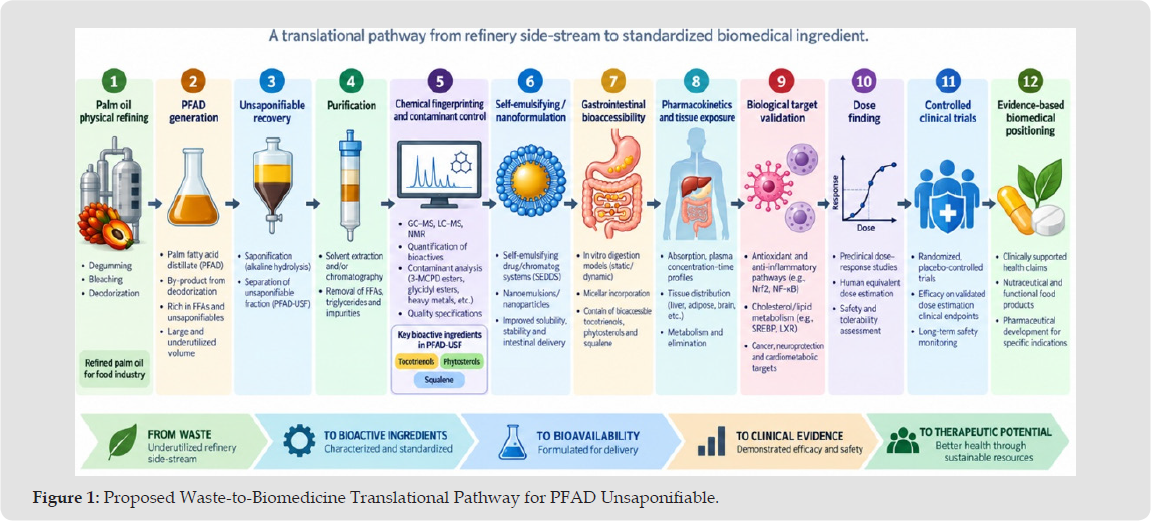
Figure 1 conceptualizes PFAD valorization as a continuous translational chain beginning with palm-oil physical refining and ending only after clinical and regulatory evidence has been established. It demonstrates why extraction or nanoformulation alone cannot be regarded as completion of the waste-to-biomedicine process.
Figure 1 emphasizes a critical translational principle: every stage depends on the integrity of the previous stage. Clinical interpretation is impossible if formulation is variable; pharmacokinetic results are difficult to reproduce without chemical standardization; and standardization is meaningless if the refinery feedstock cannot be adequately qualified. The appropriate endpoint of PFAD valorization is therefore not simply recovery of high-value chemicals but generation of reproducible evidence connecting a defined product to biological performance.
Formulation Objectives Must Be Constituent-Specific
A sophisticated PFAD-USF formulation cannot use “maximum absorption” as a universal optimization criterion. Tocotrienol pharmacokinetics suggest that enhancing dispersion and intestinal uptake may be desirable because poor oral exposure is an important limitation [39,40]. Phytosterols, however, derive much of their cholesterol-lowering effect from actions in the intestinal compartment, and excessive systemic absorption is not necessarily desirable. This difference creates a unique multicomponent design problem. An optimal PFAD-USF formulation should enhance functionally appropriate bioaccessibility, meaning that each constituent becomes available in the physiological compartment required for its intended activity without creating unnecessary exposure elsewhere. For tocotrienols this may involve systemic absorption; for phytosterols it may involve effective intestinal dispersion and micellar competition; for squalene the optimum exposure target remains to be defined. Biorelevant digestion studies are therefore particularly important. Such studies should measure how the principal constituents partition between undigested lipid, mixed micelles and precipitated phases under simulated fed and fasted conditions. Measurements should then be related to intestinal transport models and ultimately human pharmacokinetics.
Standardization Is the Bridge between Refining and Clinical Research
The fifth major theme is that biomedical development fundamentally changes the definition of an acceptable PFAD-derived product. An industrial ingredient may be satisfactory if it meets relatively broad compositional specifications. A product administered repeatedly to humans requires a much narrower and biologically meaningful specification. A biomedical-grade PFAD-USF should quantify individual tocotrienol homologues and tocopherols rather than only reporting “total vitamin E.” Different homologues may differ in pharmacokinetics and biological activity. Phytosterol analysis should similarly distinguish β-sitosterol, campesterol, stigmasterol and other relevant sterols. Squalene should be independently quantified because it is chemically and physiologically distinct. Total concentrations are insufficient without stability indicators. Phytosterol oxidation products require attention because oxidation can alter biological properties Gachumi, et al. [24]. Squalene degradation should also be monitored because its polyunsaturated structure renders it chemically reactive [23]. Chromatographic fingerprinting offers an appropriate complementary strategy. Rather than accepting a batch because one or two marker compounds meet a specification, fingerprint-based quality control evaluates the overall chemical pattern and compares it with an established reference profile. Modern natural-product quality systems increasingly combine chromatography, spectroscopy, and multivariate analysis to detect batch variation not captured by individual markers [4,49].
Figure 2
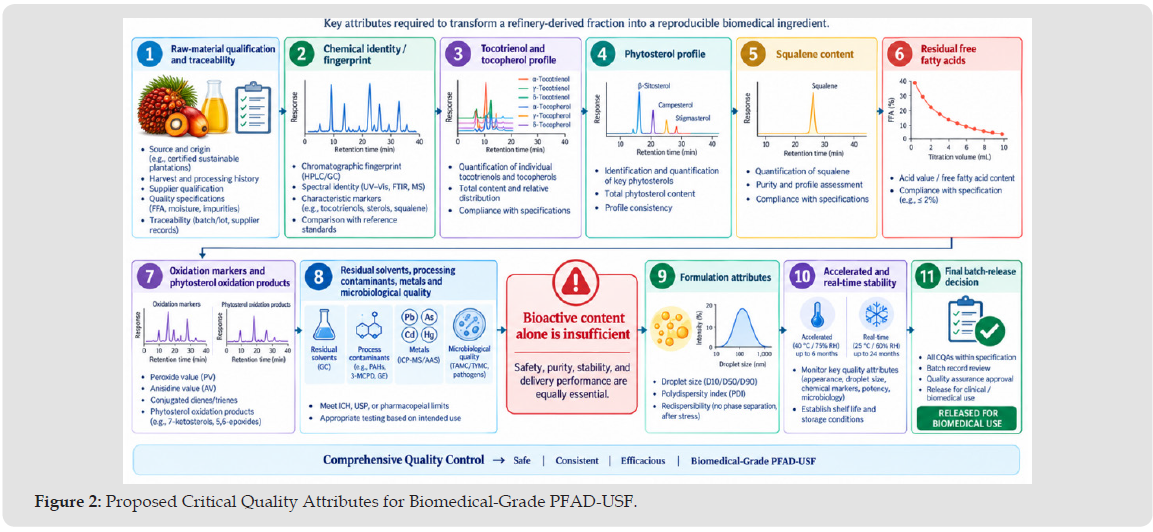
Figure 2 translates the concept of standardization into an operational quality architecture and makes clear that high bioactive concentration alone does not define biomedical quality. It also integrates identity, purity, oxidation control, formulation performance, stability, and batch-release criteria into a single quality framework suitable for reproducible biomedical development. The Figure highlights the difference between a refinery concentrate and a biomedical ingredient. The latter requires reproducibility, chemical stability, impurity control, and formulation performance in addition to nominal bioactive potency. This approach also creates the analytical foundation needed for interpreting toxicological and clinical findings.
Processing Contaminants and Oxidation Need Explicit Control
Palm refining can generate or redistribute undesirable processing contaminants. Research concerning mitigation of 3-MCPD esters and glycidyl esters demonstrates that refining conditions influence contaminant concentrations [2]. Whether particular contaminants concentrate in specific PFAD-USF products will depend on processing chemistry and therefore must be established experimentally. Residual extraction solvents represent another concern when solvent-based purification is used. Limits should be aligned with the intended pharmaceutical, nutraceutical or food regulatory framework. Trace metals, water activity and microbiological specifications may also be necessary depending on manufacturing conditions and dosage form. Oxidation is especially important because the proposed active mixture contains multiple unsaturated or oxidation-sensitive molecules. The product should therefore be manufactured and packaged under conditions designed to limit light, heat and oxygen exposure, and stability protocols should monitor both loss of desired compounds and generation of unwanted degradation products.
The Safety Gap Is Larger than It Initially Appears
The presence of dietary compounds can create an overly broad assumption of safety. Tocotrienols, phytosterols and squalene occur naturally in foods, but a concentrated PFAD-USF formulation may produce exposures far exceeding those obtained through normal consumption. It may also contain constituent ratios not normally encountered in the diet. Consequently, safety evidence generated from individual compounds cannot automatically be transferred to the complete fraction. The mixture may alter absorption, metabolism or tissue distribution. A nanoformulation could further modify exposure, meaning that toxicological assessment needs to be conducted on the final formulation rather than only on the unformulated starting material. Early safety development should therefore include compositional qualification, genotoxicity screening where appropriate, repeated-dose toxicological assessment, organ-function biomarkers and histological evaluation. Human studies should begin with tolerability and pharmacokinetic objectives before moving to disease efficacy.
Human Pharmacokinetics Is a Critical Missing Stage
Human pharmacokinetic studies provide the missing bridge between successful formulation and plausible clinical effects. Tocotrienol pharmacokinetic literature demonstrates that formulation and feeding conditions can substantially influence exposure [37]. Similar formulation dependencies are reported for phytosterols, although desired pharmacokinetic endpoints differ because systemic exposure is not necessarily the principal objective [12]. A first-in-human PFADUSF pharmacokinetic study should quantify at minimum the major tocotrienol homologues and representative sterols; squalene should be quantified where analytically feasible. Multiple time points should be used to characterize peak concentration, time to peak, exposure over time and elimination. A crossover design comparing conventional PFAD-USF with self-nanoemulsifying PFAD-USF would directly test whether formulation improves relevant exposure. The study should also investigate food effects because absorption of lipophilic compounds is often meal dependent. Importantly, an increase in systemic phytosterol exposure following nanoformulation should not automatically be interpreted as an improvement; its clinical meaning would need separate evaluation.
PFAD-USF Is a Candidate Biomedical Ingredient, Not Yet a Proven Therapeutic
The evidence synthesized in this review supports repositioning PFAD-USF as a candidate standardized multi-bioactive biomedical ingredient. This terminology is scientifically more appropriate than calling it a therapeutic ingredient because the evidence needed to establish therapeutic efficacy has not yet been generated for the complete mixture. Three developments justify the candidate designation. First, extraction research demonstrates that valuable bioactives can be recovered from PFAD. Second, constituent-level literature establishes substantial biological plausibility, including controlled human evidence for palm-derived tocotrienols and strong cholesterol-related evidence for phytosterols. Third, recent self-nanoemulsification work demonstrates that the whole unsaponifiable mixture can be converted into a technologically relevant oral-delivery format [16]. The principal weakness is product-specific evidence. Clinical trials involving tocotrienol-rich fractions cannot simply be relabeled as PFAD-USF evidence. Their phytosterol and squalene exposure, chemical profiles and dosage forms differ. Similarly, clinical phytosterol literature supports phytosterols but not a particular PFAD formulation. This distinction should remain explicit throughout future research and marketing.
Natural Mixture versus Purified Compounds
Whether the natural PFAD-USF mixture is superior to purified constituents remains an open question. Purified compounds provide clear advantages for mechanistic science: exact dosing, simpler pharmacokinetic interpretation and easier regulatory characterization. They also allow clinical investigators to isolate the contribution of specific compounds. The natural fraction potentially offers different advantages. It could require fewer purification steps, retain complementary molecules and create a broader biological profile. In principle, intestinal phytosterol activity could coexist with systemic tocotrienol effects and distinct physicochemical contributions from squalene. Such complementarity could provide an attractive multifunctional ingredient. However, the natural mixture may also be disadvantageous. A dose sufficient to deliver clinically relevant tocotrienols might provide a phytosterol quantity that is too low or unnecessarily high. Constituents could compete during intestinal solubilization or alter metabolic pathways. Natural ratios optimized by plant metabolism or refinery partitioning are not necessarily optimal therapeutic ratios. The appropriate strategy is comparative development rather than ideological preference for “natural” or “purified.” Evidence should determine whether maintaining the mixture creates measurable advantages.
Interaction Architecture: From Complementarity to Testable Synergy
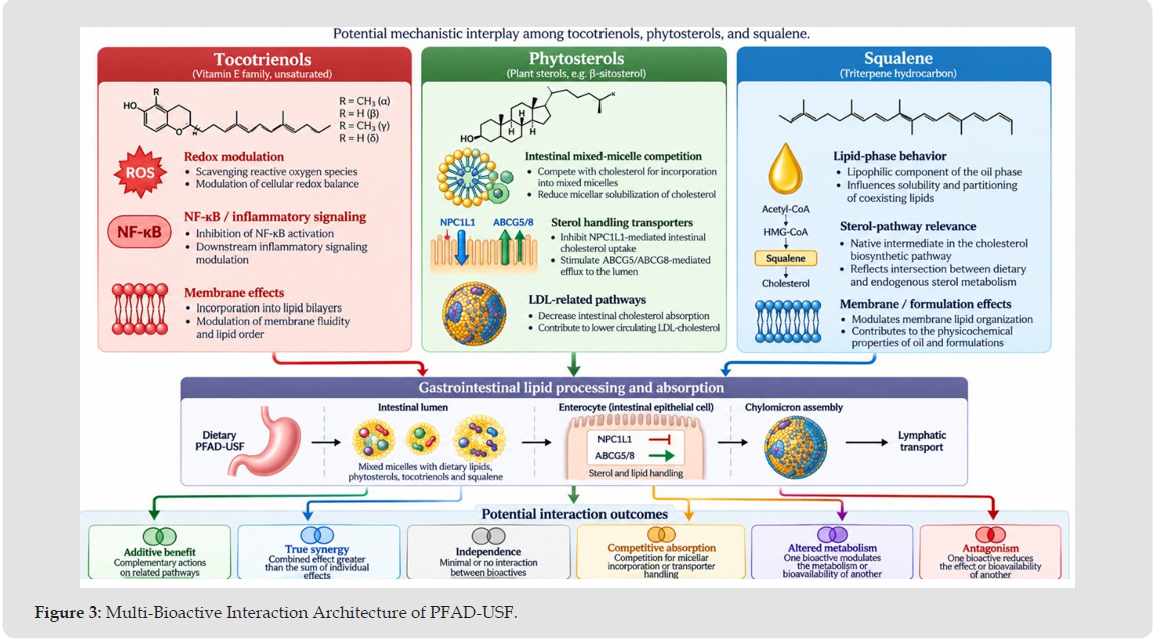
A mechanistically plausible interaction architecture can be proposed. Tocotrienols may participate in redox regulation and inflammatory signaling; phytosterols modify intestinal sterol handling; and squalene influences lipid-phase behavior and sterol-related biochemical pathways. These actions occur at different levels—from the intestinal lumen to cell membranes and intracellular signaling—which creates opportunities for complementary effects. Figure 3 illustrates three bioactive domains converging on gastrointestinal lipid processing and then diverging toward several possible interaction outcomes. Importantly, both beneficial and adverse or neutral interactions are depicted. The scientific value of the model lies in treating synergy as a falsifiable hypothesis. If the whole fraction produces an effect larger than a reconstructed combination containing identical concentrations of the major known compounds, unidentified minor constituents or matrix effects may be involved. Conversely, if purified tocotrienols reproduce virtually the entire effect, development of a complex whole fraction may offer little pharmacological advantage.
Figure 3
Self-Nanoemulsification Is a Platform, not a Clinical Endpoint
The 2025 PFAD-USF study is important precisely because it creates a platform for the next experiments. The capacity to form nano- sized dispersions may improve consistency of administration and gastrointestinal contact. Nevertheless, formulation studies should resist the temptation to equate nanoscale dimensions with superior therapy. This caution is consistent with contemporary lipid-carrier literature showing that carrier architecture, physicochemical stability, release behavior, and gastrointestinal interactions jointly determine oral delivery performance rather than particle size alone [58]. A robust formulation program should include droplet size and distribution, polydispersity, zeta potential where relevant, dispersion rate, dilution stability, precipitation, storage stability and chemical retention of the major bioactives. Dynamic digestion testing should measure whether nanoemulsification alters micellar incorporation. Only after these stages should claims regarding improved bioavailability be tested pharmacokinetically. Surfactant selection also requires toxicological and regulatory consideration. An excipient acceptable in a conventional oral formulation may become problematic at high chronic doses. Therefore, the most effective formulation in terms of particle size may not necessarily be the optimal biomedical formulation.
Proposed Biomedical-Grade PFAD-USF Specification
A future PFAD-USF specification should include both identity and performance parameters. Identity parameters would cover quantitative profiles of tocotrienols/tocopherols, phytosterols and squalene. Performance parameters would include relevant formulation behavior, stability and, eventually, biological or dissolution-related specifications. The tocotrienol profile should quantify individual α-, β-, γ- and δ-tocotrienols where technically possible, as well as tocopherols. The sterol profile should distinguish β-sitosterol, campesterol, stigmasterol and other relevant components. Total squalene should be quantified by a validated method. Residual free fatty acids should be controlled because they affect both product identity and formulation behavior. Oxidative stability should be assessed using appropriate primary and secondary oxidation markers together with targeted phytosterol oxidation-product assays where feasible. Residual solvents and known processing contaminants should meet application-specific limits. Chromatographic fingerprint similarity should be established across multiple production batches before pivotal toxicological or clinical testing. This standardization process may ultimately result in a partially modified rather than completely “natural” composition. For example, manufacturers may selectively enrich tocotrienols while controlling phytosterol dose or remove unwanted constituents. The concept of PFAD-USF should therefore remain technologically flexible provided the final product identity is explicit and reproducible.
Translational Safety Program
A staged safety program is preferable to direct progression into large efficacy trials. Initial analytical characterization should establish exactly what material is being tested. This should be followed by relevant in vitro safety assessment and, where required by the intended regulatory pathway, repeated-dose animal studies.
Potential target systems include hepatic metabolism, lipid homeostasis and gastrointestinal tolerance because the product contains concentrated lipid-soluble compounds. Hematological and biochemical markers should be evaluated, and organ distribution should be characterized where feasible. Oxidized sterol species deserve particular attention if processing or storage conditions permit their accumulation [24]. Human safety studies should initially examine single and repeated doses with escalating exposure. Such trials can simultaneously produce pharmacokinetic data and identify whether self-emulsification changes tolerability. Subsequent trials should select doses on the basis of exposure and biological target engagement rather than merely scaling from the concentration obtainable during extraction.
Dose-Response Is a Multi-Component Optimization Problem
A critical challenge is that the desired dose of each component may differ. Effective phytosterol intake for cholesterol-related outcomes may not coincide with the tocotrienol dose needed for relevant systemic exposure. Squalene introduces a third dose dimension. A fixed natural ratio may therefore be biologically suboptimal. One possible development path is to define a standardized PFAD-USF “core” but permit controlled enrichment or adjustment of selected constituents. This would preserve the circular-bioeconomy origin while allowing formulation to target specific clinical indications. Dose-response studies should measure both pharmacodynamic outcomes and constituent-specific exposure. The preferred dose should be the lowest that produces meaningful target engagement without unnecessary exposure or adverse effects.
Clinical Development Strategy
After safety and PK studies, small proof-of-concept trials should focus on indications where the constituent profile provides a coherent mechanistic rationale. Dyslipidemia or cardiometabolic risk may be a logical early target because phytosterol activity has a well-characterized biomarker endpoint and tocotrienols have relevant metabolic and inflammatory literature. Early trials should use predefined endpoints such as LDL cholesterol, non-HDL cholesterol, apolipoproteins, inflammatory markers or oxidative-stress indicators rather than broad claims of “general wellness.” Biomarkers should correspond to mechanisms plausibly engaged by the standardized dose. A particularly informative design would compare PFAD-USF nanoformulation with a composition-matched conventional preparation. If the nanoformulation improves pharmacokinetic exposure but does not improve biological outcomes, the formulation hypothesis would need revision. Conversely, improved exposure combined with improved target engagement would justify larger trials.
Waste-to-Biomedicine as a Translational Model
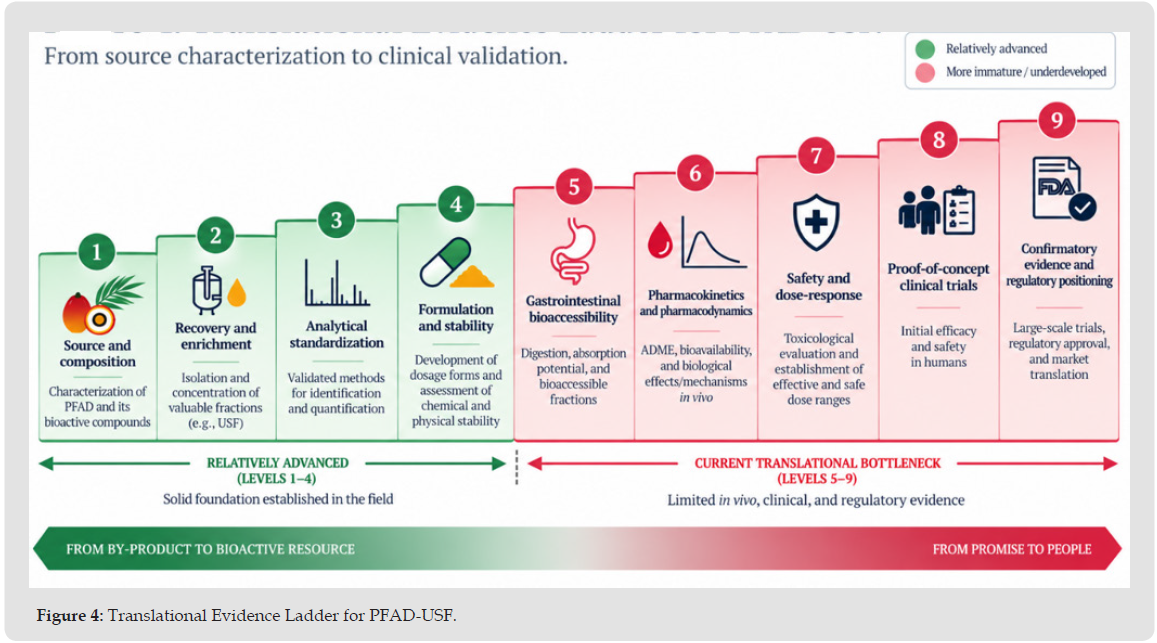
The proposed pathway has implications beyond PFAD itself. Agro-industrial residues are increasingly promoted as sources of nutraceutical and pharmaceutical compounds, but many valorization studies stop at extraction yield or antioxidant assays. The PFAD case illustrates why biomedical valorization requires a substantially longer evidence chain. Figure 4 presents the field as a nine-level translational evidence ladder and distinguishes areas with a relatively strong technological foundation from areas where the evidence remains immature. The upper levels therefore represent not additional refinements to extraction, but the evidence required to establish human exposure, safety, efficacy, and eventual regulatory positioning. The present literature indicates that Levels 1–4 are substantially more developed than Levels 5–9. The next major research investment should therefore shift from repeated demonstration of extraction feasibility toward the biological and clinical stages that determine whether PFAD-USF ultimately becomes an evidence-based health product.
Figure 4
Circular Bioeconomy and Sustainability Implications
Recovery of high-value compounds from PFAD potentially increases the economic productivity of existing palm-oil refining without requiring additional plantation area solely for bioactive production. This is attractive from a circular-economy perspective because value is generated from a stream already produced during conventional refining. Analogous approaches have been proposed for squalene recovery from olive-processing by-products, demonstrating that food-sector side streams can provide alternative sources of compounds otherwise obtained from dedicated or environmentally sensitive resources [13,15]. Microbial squalene production similarly illustrates the rapidly changing competitive environment for sustainable bioactive sourcing [48,53]. Nevertheless, circularity cannot be assumed merely because a side stream is utilized. Solvent requirements, energy consumption, supercritical-processing demands, purification losses, surfactant use and waste generation should be evaluated through life-cycle and techno-economic analysis. A biomedical PFAD-USF process could be scientifically successful but commercially or environmentally inefficient. The strongest sustainability proposition would therefore combine high recovery efficiency, low environmental burden, safe processing, consistent biomedical quality and sufficient economic value to justify separation from bulk PFAD uses.
This proposition should be tested through coordinated life-cycle and techno-economic analyses rather than assumed solely from the use of a refinery-derived side stream.
Integrated Answers to the Research Questions
The evidence provides a qualified affirmative answer to the primary research question. PFAD-USF can reasonably be conceptualized as a candidate standardized multi-bioactive biomedical ingredient because relevant compounds can be recovered, individual constituents possess substantial biological evidence and self-nanoemulsification demonstrates formulation feasibility. However, clinical therapeutic status is premature. Regarding composition, PFAD-USF is inherently process dependent. Feedstock, refining and extraction conditions can alter both concentration and ratios of the principal bioactives. Chemical fingerprinting and batch-control systems are therefore essential. Regarding biological activity, tocotrienols and phytosterols possess the strongest contemporary evidence, with squalene providing additional biochemical and formulation relevance. This evidence establishes plausibility but not complete-fraction efficacy. Regarding synergy, no robust conclusion can presently be made. Additive and complementary mechanisms are plausible, but interaction studies are needed to distinguish synergy from simple coexistence or competition. Regarding oral delivery, self-emulsifying systems offer a promising technological approach to poor aqueous dispersibility, but improvement in pharmacokinetic exposure and clinical outcomes remains to be demonstrated directly for PFAD-USF. Accordingly, formulation performance should be judged by constituent-specific bioaccessibility and human exposure rather than by droplet size or dispersion behavior alone.
Regarding safety, concentrated whole-fraction toxicology and human exposure data represent critical missing evidence. The safety histories of individual compounds cannot automatically substitute for studies of the final formulation. Finally, the translational roadmap requires sequential movement from refinery qualification and chemical standardization to formulation, gastrointestinal testing, pharmacokinetics, safety, dose-response and controlled clinical trials. Progression should be gated by predefined evidence criteria at each stage so that weak standardization or safety data are not carried forward into efficacy testing.
PFAD represents considerably more than a bulk free-fatty-acid by-product of palm-oil refining. Its unsaponifiable fraction provides a technically recoverable combination of tocotrienols, tocopherols, phytosterols, squalene and related minor constituents that creates a credible platform for higher-value biomedical and nutraceutical development. The most important finding of this review is nevertheless the distinction between evidence for the components and evidence for the complete product. Tocotrienols possess substantial mechanistic and increasing human evidence; phytosterols have well-established cholesterol-related activity; and squalene offers distinct biochemical and formulation potential. None of these findings alone establishes that whole PFAD-USF is therapeutic or synergistic. Current technological progress, particularly the emergence of self-nanoemulsifying PFAD-USF formulations, justifies advancing the field toward biological translation. Priority should now shift toward rigorous chemical fingerprinting, oxidative-stability control, toxicology, gastrointestinal bioaccessibility, human pharmacokinetics, dose-response and direct comparison of whole PFAD-USF with purified or reconstructed component mixtures. If these steps demonstrate reproducible composition, favorable safety, appropriate constituent-specific exposure and meaningful clinical effects, PFAD-USF could become an important example of converting an agro-industrial side stream into an evidence-based biomedical resource. Until those data are available, it is most appropriately characterized as a promising standardized multi-bioactive candidate whose therapeutic value remains to be demonstrated.

International Association of Landscape Archaeology, Czech Glass Society, Czech Republic

Department of Chemistry, Semenov Institute of Chemical Physics, USSR Academy of Sciences, Moscow, Russia

Associate Professor at Department of Breast and Thyorid Surgey, Chongqing General Hospital, China

Professor of Nuclear Medicine, Faculty of Medicine and Surgery, University of Milan, Milan, Italy

Department of Pharmaceutical Sciences, South University School of Pharmacy, USA





 Abstract
 PDF