[email protected]
+1 (502) 904-2126
One Westbrook Corporate Center, Suite 300, Westchester, IL 60154, USA
Site Map
 ISSN: 2574 -1241
Received: August 27, 2026; Published: September 07, 2026
*Corresponding author: Alparslan Dilsiz, Department of Periodontology, Faculty of Dentistry, Atatürk University, Turkey
DOI: 10.26717/BJSTR.2026.66.010376
Background/Aim: Periodontal disease is a chronic inflammatory disorder characterized by the progressive
destruction of the hard and soft tissues supporting the teeth. Although periodontal therapy is primarily aimed
at eliminating inflammation and preserving periodontal health, treatment in the anterior region may give rise
to esthetic and phonetic concerns due to soft tissue loss. Therefore, successful periodontal management should
extend beyond disease control to include the restoration of lost tissues while satisfying esthetic, functional, and
speech-related requirements. In situations where surgical reconstruction is not feasible or preferred, gingival
epithesis represents an affordable and practical treatment alternative. The present case report describes the
successful rehabilitation of a patient using a removable gingival epithesis as an economical approach for restoring
esthetics and phonetics following periodontal tissue loss.
Case Report: A 37-year-old woman was referred for the management of periodontal disease and exhibited gingival
recession affecting both the maxillary and mandibular anterior teeth following completion of non-surgical
periodontal therapy. Considering the patient’s economic limitations together with her esthetic expectations,
rehabilitation with a removable gingival epithesis was selected as the treatment approach. Conventional impressions
were obtained, and the prosthesis was fabricated using heat-cured acrylic resin. Following delivery of
the gingival epithesis, the patient was provided with detailed instructions regarding its use and maintenance.
Clinical follow-up was performed for 6 and 12 months to assess adaptation to the prosthesis, plaque control, and
overall hygiene.
Results: The patient expressed a high level of satisfaction with the esthetic appearance achieved by the gingival
epithesis and demonstrated good adaptation to the prosthesis throughout the observation period. Detailed oral
hygiene instructions were provided, emphasizing the importance of cleaning the epithesis after each meal and
keeping it immersed in water during overnight storage. Throughout the follow-up period, periodontal tissues
remained healthy, and no complications related to the periodontal condition or the prosthesis were detected.
Conclusion: Gingival epithesis represents a practical and cost-effective treatment option for restoring the soft
tissue deficiencies associated with periodontal tissue loss while improving esthetic appearance and promoting
patient satisfaction. In addition to providing predictable functional and esthetic rehabilitation, this approach
substantially decreases the overall treatment cost, making it an accessible alternative for patients requiring periodontal
prosthetic rehabilitation.
Keywords: Periodontal Prosthesis; Gingival Epithesis; Gingival Mask; Gingival Esthetics; Gingival Recession; Non-Surgical Periodontal Therapy
Periodontal disease is a chronic inflammatory disorder characterized by the progressive destruction of the hard and soft tissues that support the dentition [1-4]. As a consequence of periodontal tissue loss, patients may experience esthetic and phonetic problems, particularly when the anterior region is involved. Accordingly, periodontal treatment should focus not only on controlling inflammation and disease progression but also on restoring lost tissues while improving esthetic appearance, oral function, and speech. In cases where reconstruction of the gingival tissues by regenerative procedures is not indicated or cannot be achieved predictably, a gingival epithesis-also known as a periodontal prosthesis, gingival mask, or party gums— may serve as a conservative, esthetic, and economical treatment option [5-16]. The first clinical application of a gingival epithesis for masking the unaesthetic appearance caused by gingival recession was described by Emslie in 1955 [16]. Since then, gingival epitheses have been employed not only to restore esthetics but also as vehicles for topical drug delivery and periodontal dressings [16]. Depending on clinical requirements, these prostheses can be fabricated from a variety of materials, including heat-cured acrylic resin, silicone-based resilient materials, composite resins, and thermoplastic acrylics [10- 16].
Because the contour and appearance of the gingival tissues substantially influence smile esthetics, they should be carefully considered during treatment planning. The present case report describes the successful use of a removable gingival epithesis as an economical treatment alternative for the rehabilitation of esthetic and phonetic deficiencies associated with periodontal tissue loss. This case report was prepared and reported in accordance with the CaReL guidelines [17].
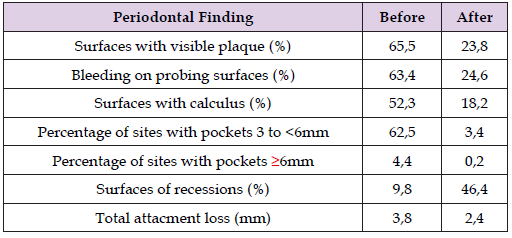
A 37-year-old woman was admitted to the Department of Periodontology for comprehensive assessment and management of periodontal disease. Her medical history was unremarkable, with no known systemic diseases, allergies, smoking history, or alcohol consumption. The patient complained of gingival bleeding, erythema, and hypersensitivity, accompanied by visible plaque accumulation and slight calculus deposits. Clinical examination demonstrated generalized gingival inflammation together with interproximal attachment loss. Panoramic radiographic evaluation revealed alveolar bone loss, widening of the periodontal ligament space, disruption of the lamina dura, and furcation involvement in all teeth except those in the anterior region (Figure 1A). Based on the clinical and radiographic findings, the patient was diagnosed with Stage II periodontitis. A summary of the patient’s periodontal parameters is presented in Table 1.
Figure 1
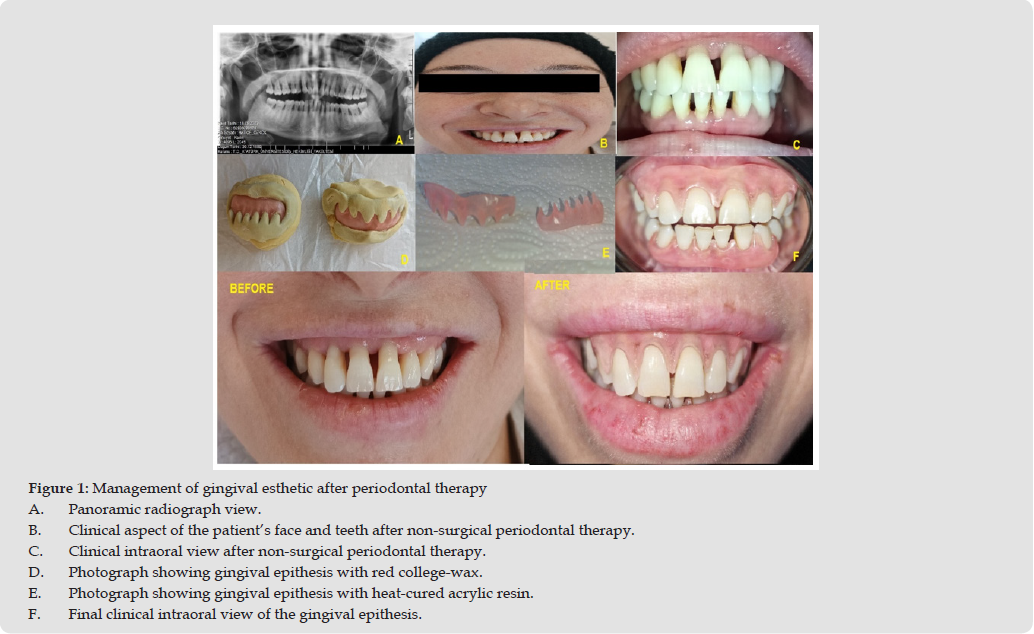
Table 1: Periodontal findings of patient before and after non-surgical periodontal therapy (CAL 3–4 mm Stage II, no tooth missing).
Treatment
Initial periodontal therapy consisted of full-mouth scaling and root planing, subgingival curettage, and polishing of all tooth surfaces. Following treatment, the patient was prescribed systemic antibiotics (amoxicillin plus metronidazole, 500 mg every 12 hours for 7 days), analgesic medication (naproxen 550 mg every 12 hours for 5 days), and a chlorhexidine mouth rinse (Kloroben®, Drogsan Drug Ltd., Istanbul, Turkey). Oral hygiene instructions included brushing twice daily with a soft-bristled toothbrush for approximately 3 minutes per session. At the 8-week re-evaluation, the gingival inflammation had resolved; however, gingival recession persisted, particularly in the maxillary and mandibular anterior regions. Plaque control was considered satisfactory, although moderate extrinsic tooth discoloration was observed. The patient’s primary concern was the compromised esthetic appearance caused by gingival recession affecting the anterior teeth of both jaws (Figures 1B & 1C). Although motivated to improve the esthetic outcome, she declined further surgical or regenerative treatment. Therefore, considering the patient’s esthetic expectations, financial limitations, social concerns, and personal preference, rehabilitation with a removable gingival epithesis was selected as the most appropriate treatment option.
Fabrication of Gingival Epithesis
Conventional impressions were taken using alginate (Hydrogum 5, Zhermack, Badia Polesine, Italy) and silicone-based materials (Elite HD+, Zhermack, Badia Polesine, Italy) to create a working model. An intraoral try-in of a wax-up was performed using red college-wax (Nowax, President Dental, Allershousen, Germany) (Figures 1D & 1E). The final gingival epithesis was fabricated from heat-cured acrylic resin (MelioDent, Heraeus, Hanau, Germany), ensuring adequate retention through engagement with interdental embrasures. The finished epithesis was adapted to the patient’s anterior teeth during an insertion visit (Figure 1F). Adequate retention was accomplished due to the flexibility of the material and engagement of the epithesis into the interdental open gingival embrasures.
Outcome
The removable gingival epithesis was successfully accepted by the patient, providing satisfactory esthetic improvement together with a comfortable fit during function (Figure 1F). Detailed instructions regarding the maintenance of the prosthesis were given, including cleaning it after every meal and keeping it immersed in water while not in use overnight. Clinical evaluations performed over a 12-month follow-up period demonstrated stable periodontal conditions, satisfactory plaque control, and the absence of any complications associated with either the periodontal tissues or the prosthesis. This case report was carried out in accordance with the ethical principles outlined in the 2013 revision of the Declaration of Helsinki. Prior to publication, written informed consent was obtained from the patient for the use of the clinical information and accompanying photographic documentation.
Periodontal disease frequently results in gingival recession, creating both esthetic and functional problems for affected patients. Although a wide range of surgical and non-surgical periodontal treatment modalities are available to control disease progression, these procedures may also lead to undesirable esthetic outcomes, including elongated clinical crowns and the formation of interdental black triangles. In such situations, gingival epithesis represents a practical and conservative treatment alternative for restoring the lost gingival contour. A gingival epithesis is a removable periodontal prosthesis intended to improve esthetic appearance and phonetic function by replacing missing soft tissues and masking interdental spaces [5-8]. The patient described in the present report experienced both esthetic and phonetic impairment as a consequence of gingival recession. Rehabilitation with a removable gingival epithesis provided a simple, economical, and effective solution, resulting in satisfactory recovery of both esthetic appearance and oral function.
As a chronic inflammatory disorder, periodontal disease may lead to the destruction of the interdental papillae, gingival recession, alveolar bone loss, and, ultimately, tooth loss. Mechanical periodontal therapy performed with both hand and powered instruments is widely accepted as an effective approach for eliminating local etiologic factors and controlling periodontal inflammation [1-4]. Nevertheless, successful periodontal treatment, particularly in the anterior maxillary and mandibular regions, may still leave esthetic, phonetic, and functional deficiencies. In the present case, full-mouth scaling and root planing, subgingival curettage, and crown polishing successfully eliminated local irritants; however, residual gingival recession remained the patient’s primary esthetic concern. Gingival epithesis is a flexible removable periodontal prosthesis that has been widely applied in maxillofacial rehabilitation. Different designs, fabrication techniques, and clinical applications have been described in the literatüres [5-8]. Previous studies have demonstrated that gingival epitheses effectively restore esthetic appearance and phonetic function by masking interdental black spaces while allowing patients to maintain satisfactory oral hygiene, findings that are consistent with the clinical outcome observed in the present case [10-14]. A variety of materials have been recommended for the fabrication of gingival epitheses, including heat-cured acrylic resin, silicone-based resilient materials, porcelain, composite resin, thermoplastic acrylics, and copolyamide [12-16]. Selection of the material should be based on its ability to provide optimal esthetics while preserving periodontal health and ensuring patient comfort. In the present case, heat-cured acrylic resin was selected because it offers a favorable combination of ease of fabrication, durability, safety, and low cost. Consistent with previous reports, the present case demonstrated that a removable gingival epithesis can provide predictable esthetic and functional rehabilitation through a minimally invasive and economical approach while maintaining periodontal health [6,10].
Gingival epithesis represents a reliable and economical treatment option for restoring esthetic appearance and improving phonetic function in patients with periodontal tissue loss. In addition to providing satisfactory functional and esthetic rehabilitation, the use of heatcured acrylic resin substantially lowers the overall cost of treatment, making this approach accessible to a wider patient population. Compared with alternative materials, fabrication with heat-cured acrylic resin can reduce the cost of rehabilitation using a gingival epithesis by more than 70%, while maintaining favorable clinical outcomes.
This study received no specific grant from any funding agency in the public, commercial, or non-profit sectors.
The authors declare no competing interests.
Alparslan Dilsiz diagnosed and managed the patient, conceived the idea of the case report, drafted the manuscript, and critically revised the manuscript. Alparslan Dilsiz, Nuran Yanıkoglu, Aysegul Tanas, Aysegul Turksoy, Fevziye Bekdas, Zeynep Tekin performed periodontal therapy and prosthetic procedure. All authors read and approved final version of text.

International Association of Landscape Archaeology, Czech Glass Society, Czech Republic

Department of Chemistry, Semenov Institute of Chemical Physics, USSR Academy of Sciences, Moscow, Russia
Associate Professor at Department of Breast and Thyorid Surgey, Chongqing General Hospital, China

Professor of Nuclear Medicine, Faculty of Medicine and Surgery, University of Milan, Milan, Italy

Department of Pharmaceutical Sciences, South University School of Pharmacy, USA





 Abstract
 PDF