[email protected]
+1 (502) 904-2126
One Westbrook Corporate Center, Suite 300, Westchester, IL 60154, USA
Site Map
 ISSN: 2574 -1241
ISSN: 2574 -1241
ISSN: 2574 -1241
Received: July 17, 2026; Published: July 30, 2026
*Corresponding author: Depeng Jiang, Department of Respiratory Medicine, Second Affiliated Hospital of Chongqing Medical University, Chongqing, China
DOI: 10.26717/BJSTR.2026.66.010328
Background: Lower respiratory infections (LRIs) are a significant global health issue, and smoking is a notable
risk factor.
Methods: Data on deaths and disability-adjusted life years (DALYs) were extracted from the Global Burden of
Disease (GBD) 2021. The estimated annual percentage changes (EAPCs) were used to assess trends. Decomposition
analysis was performed to evaluate the effects of population growth, aging, and epidemiological changes.
Bayesian age-period-cohort analysis was used to generate projections.
Findings: In 2021, the age-standardized death and DALY rates of smoking-attributable LRIs were 2.32 (95%
uncertainty interval (UI): 1.8 to 2.83) and 52.04 (95% UI: 40.58 to 62.91) per 100,000 population. The number
of deaths were 193,484 (95% UI: 150,393 to 236,120) and DALYs reached 4,455,405 (95% UI: 3,472,541 to
5,382,343), significantly influenced by population growth and aging, particularly in regions with a middle sociodemographic
index (SDI). South Asia recorded the highest numbers, while the highest rates were observed
in Southern Sub-Saharan Africa. The high SDI regions experienced the most significant decreases, notably in
Finland and Ireland, whereas the low to middle SDI regions bore a significantly high burden. The number of
deaths and DALYs peaked in the 70-74 and 60-64 age groups, with rates increasing with age. Men carried a disproportionately
higher disease burden than women. Projections indicate declines in death and DALYs by 2030 to
153,868 (95% CI: 87,473 to 220,262) and 3,361,019 (95% CI: 1,908,951 to 4,813,087) respectively, with rates
expected to decrease to 1.37 (95% CI: 0.8 to 1.95) per 100,000 for deaths and 30.8 (95% CI: 17.92 to 43.68) per
100,000 for DALYs.
Conclusions: Despite declines in smoking-attributable LRIs, smoking continues to pose a substantial risk, especially
in lower SDI regions and older males. These disparities underscore the critical need to prioritize efficacious
and targeted smoking cessation strategies to enhance LRI management.
Keywords: Lower Respiratory Infections; Smoking; Global Burden; Epidemiology; Deaths; Disability-Adjusted Life Years
Abbreviations: DALYS: Disability-Adjusted Life Years; EAPC: Estimated Annual Percentage Changes; SDI: Social- Demographic Index; GBD: Global Burden of Disease; ASRs: Age-Standardized Rates; CI: Confidence Interval; GAPPD: Global Action Plan for Pneumonia and Diarrhea; LRIS: Lower Respiratory Infections; UI: Uncertainty Interval; YLDS: Years Lived with Disability; YLLS: Years of Life Lost
Lower respiratory infections (LRIs), as defined by the Global Burden of Disease Study (GBD), comprise clinician-diagnosed pneumonia or bronchiolitis, posing a significant global health threat with an annual toll exceeding 2 million deaths. [1] High-risk individuals often encounter challenges in accessing clean cooking fuel, adequate sanitation, and optimal temperatures. [2] Despite advancements in combating LRIs, resulting in a decline in LRI incidence and mortality worldwide, particularly among children under 5 years old, there is a lack of emphasis on assessing modifiable risk factors. [1,2] Smoking is a well-established causative factor for LRIs, contributing to over 20% of incident cases and deaths from respiratory infections. [2,3] Smoking has imposed a significant global health burden, resulting in over 200 million deaths worldwide in the past three decades, with more than half of smokers succumbing to smoking-related illnesses. [4] It contains over 250 chemical components that are toxic or carcinogenic and can damage nearly all organs of the human body. [5] In the respiratory tract, smoking can harm alveolar epithelial cells, trigger the release of inflammatory mediators, impact immune responses, reduce cough reflex sensitivity, and lead to ciliary dysfunction, compromising pathogen clearance. [5,6] Kark et al. found that smokers are more likely to contract influenza than non-smokers and experience more severe symptoms [7].
A review of 27 studies revealed that current smokers double their likelihood of contracting community-acquired pneumonia. [8] Furthermore, smoking can weaken the protective effect of vaccines, increase the pathogen load after infection, and worsen tissue lesions. [9] During the COVID-19 pandemic, smokers exhibited increased odds of COVID-19 diagnosis and were 50% more likely to have severe symptoms and complications such as pneumonia. [10] Despite a decline in smoking prevalence in recent years, it remains a predominant risk factor for deaths associated with respiratory infections, particularly among adult males. [4] Smoking accounts for around onethird of fatalities from LRIs in males aged 50–69 years. [2] Promoting smoking cessation and providing education are the most pragmatic and cost-effective preventive strategies to mitigate tobacco-induced disease progression. [3,11] Understanding the evolving landscape of smoking-attributable LRIs is crucial for efficient allocation of public health resources and clinical decision-making. This study systematically analyzed the global, regional, and national burden of smoking-attributable LRIs using data from GBD 2021, a comprehensive global initiative providing estimates of various diseases, injuries, and risk factors. The aim was to provide insights into the development of policies, allocation of resources, and enhancement of clinical practices.
Data Source
Data on deaths and disability-adjusted life years (DALYs) of smoking- attributable LRIs were obtained from the GBD 2021 result tool. [12] The GBD study is a global initiative offering estimates of various diseases and injuries among diverse regions and demographics. In the GBD study, LRIs was defined as clinician-diagnosed pneumonia or bronchiolitis. Smoking is characterized by the use of any smoked tobacco product, whether present or previous, either daily or sporadically. The mortality data for LRIs were obtained from vital registrations, verbal autopsies, and surveillance. The incidence and prevalence data for LRIs were sourced from systematic literature reviews, population-based surveys, claims data, and inpatient records. The years of life lost (YLLs) were calculated by multiplying the estimated mortality in each age group by the remaining life expectancy. Years of disability (YLDs) were computed by multiplying the prevalence of each severity category by the disability weight. Disability-adjusted life years (DALYs) were determined as the sum of YLLs and YLDs, which is a widely recognized composite indicator of disease burden. Attributable burden refers to the potential decrease in the existing disease burden that could have occurred if past population exposure had transitioned to an alternative or hypothetical risk exposure distribution. The burden of smoking attributable-LRIs was determined by multiplying population attributable fractions with the corresponding burden of LRIs based on sex, age, year, and location. [13] More details about the GBD study can be found in the supplemental content (Supplemental Methods).
Descriptive Analysis
Percentage changes were calculated to assess the trends in the absolute numbers of smoking-attributable LRI deaths and DALYs between 1990 and 2021. The formula used was as follows: Percentage change = (number2021 – number1990)/number1990. The estimated annual percentage change (EAPC) was employed to analyze trends in age-standardized rates (ASRs). [14] The EAPC and its 95% CI were derived using a linear regression model: EAPC = (exp(β) - 1) × 100, where β represents the regression coefficient of the year independent variable. An EAPC exceeding zero with a 95% CI signifies a rising trend, whereas an EAPC below zero with a 95% CI denotes a declining trend. A world map was generated to illustrate EAPCs on a national scale. These analyses were conducted using R version 4.4.0. The text in this study was polished and significantly improved using Stork’s Writing Assistant (https://www.storkapp.me/writeassistant/). The text and figures have been further improved by American Journal Experts (AJE) (https://china.aje.com/cn/home/). The infographic was generated using Figdraw (https://www.figdraw.com/static/index. html#/).
Decomposition Analysis
Applying Das Gupta’s decomposition analysis, this study aimed to determine the specific contributions of population growth, aging, and epidemiological changes to the fluctuations in deaths and DALYs numbers observed between 1990 and 2021 [15].

where i represents the age group, ai, y denotes the proportion of the total population in age group i in year y , y p signifies the total population in year y , and ei, y indicates the age-standardized death rate in year y . Specifically, epidemiological changes involve shifts in the distribution and determinants of health conditions in populations, which are influenced by factors such as environmental conditions, genetics, socioeconomic status, and policies. These changes can be quantified as follows,

Projections of Future Burden
The Bayesian age-period-cohort (BAPC) model was applied to project the future burden of smoking-attributable LRIs until 2030, integrating Integrated Nested Laplace Approximations for robust trend forecasting. [16] The probabilistic forecasts from the BAPC model demonstrated good calibration and precision, indicating high predictive accuracy in capturing temporal patterns and dynamics, which facilitates the anticipation of the evolving epidemiological landscape of the burden of smoking-attributable LRIs. Deaths and DALYs were segmented into five-year age-group intervals, and population data up to 2030 were aggregated to produce forecasts.
Ethics Statement
This study involved a secondary analysis of the GBD 2021, with no inclusion of animal or human studies, or potentially identifiable human images or data.
Global Deaths and DALYs Of LRIs Attributable to Smoking
In 2021, smoking was responsible for 193,484 deaths (95% UI: 150,393 to 236,120), indicating a 22.89% increase from 1990 levels. The age-standardized death rate decreased from 4.44 (95% UI: 3.51 to 5.43) per 100,000 population in 1990 to 2.32 (95% UI: 1.8 to 2.83) per 100,000 population in 2021, with an EAPC of -2.062 (95% CI: -2.179 to -1.945). DALYs reached 4,455,405 (95% UI: 3,472,541 to 5,382,343) in 2021, with a 13.95% increase from 1990. The age-standardized DALY rate decreased from 97.81 (95% UI: 78.27 to 118.26) in 1990 to 52.04 (95% UI: 40.58 to 62.91) in 2021, with an EAPC of -2.02 (95% CI: -2.157 to -1.884) (Table 1).
Table 1: The deaths and disability-adjusted life years of lower respiratory infections attributable to smoking in 1990 and 2021, and the temporal trends from 1990 to 2021.
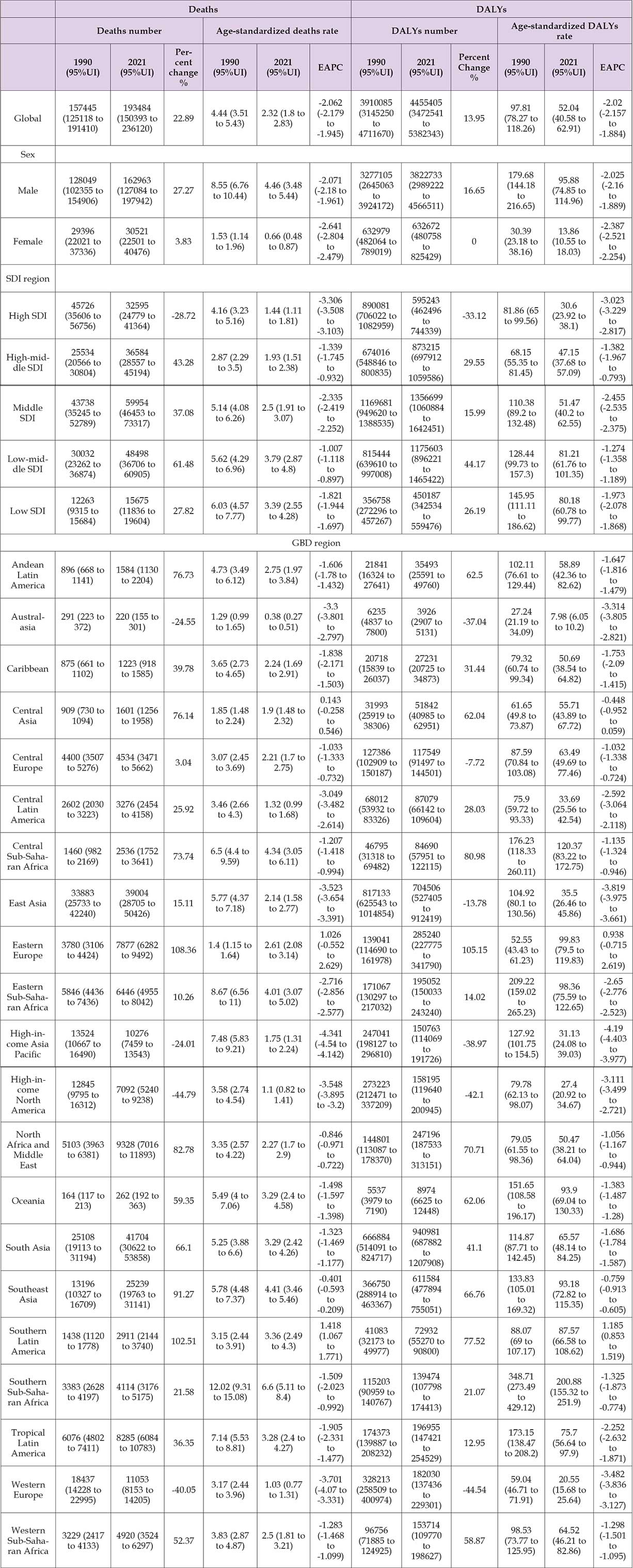
Abbreviations: DALYs, disability-adjusted life years; EAPC, estimated annual percentage changes; SDI, social-demographic index; GBD, global burden of disease.
Regional Deaths and DALYs of LRIs Attributable to Smoking
In 2021, South Asia had the highest number of deaths and DALYs related to smoking-attributable LRIs at 41,704 (95% UI: 30,622 to 53,858) and 940,981 (95%UI: 687,882 to 1,207,908) respectively, followed by East Asia and Southeast Asia. The age-standardized death and DALY rates were most pronounced in Southern Sub-Saharan Africa at 6.6 (95%UI: 5.11 to 8.4) and 200.88 (95%UI: 155.32 to 251.9) in 2021, and lowest in Australasia at 0.38 (95%UI: 0.27 to 0.51) and 7.98 (95%UI: 6.05 to 10.2) respectively. Eastern Europe exhibited the highest rise in death and DALY numbers compared with 1990, whereas High-income North America and Western Europe witnessed the most significant decline.
Between 1990 and 2021, age-standardized death and DALY rates decreased across most regions, except for Southern Latin America, Eastern Europe, and Central Asia. The most notable reduction in these rates occurred in High-income Asia Pacific, showing EAPCs of -4.341 (95% CI: -4.54 to -4.142) and -4.19 (95% CI: -4.403 to -3.977) for death and DALY rates, respectively (Table 1). Males exhibited higher ASRs across all regions, particularly in Central Sub-Saharan Africa, Eastern Europe, and Southern Sub-Saharan Africa (Supplementary Figures 1 & 2).
Supplementary Figure 1

Supplementary Figure 2

National Deaths and DALYs of LRIs Attributable to Smoking
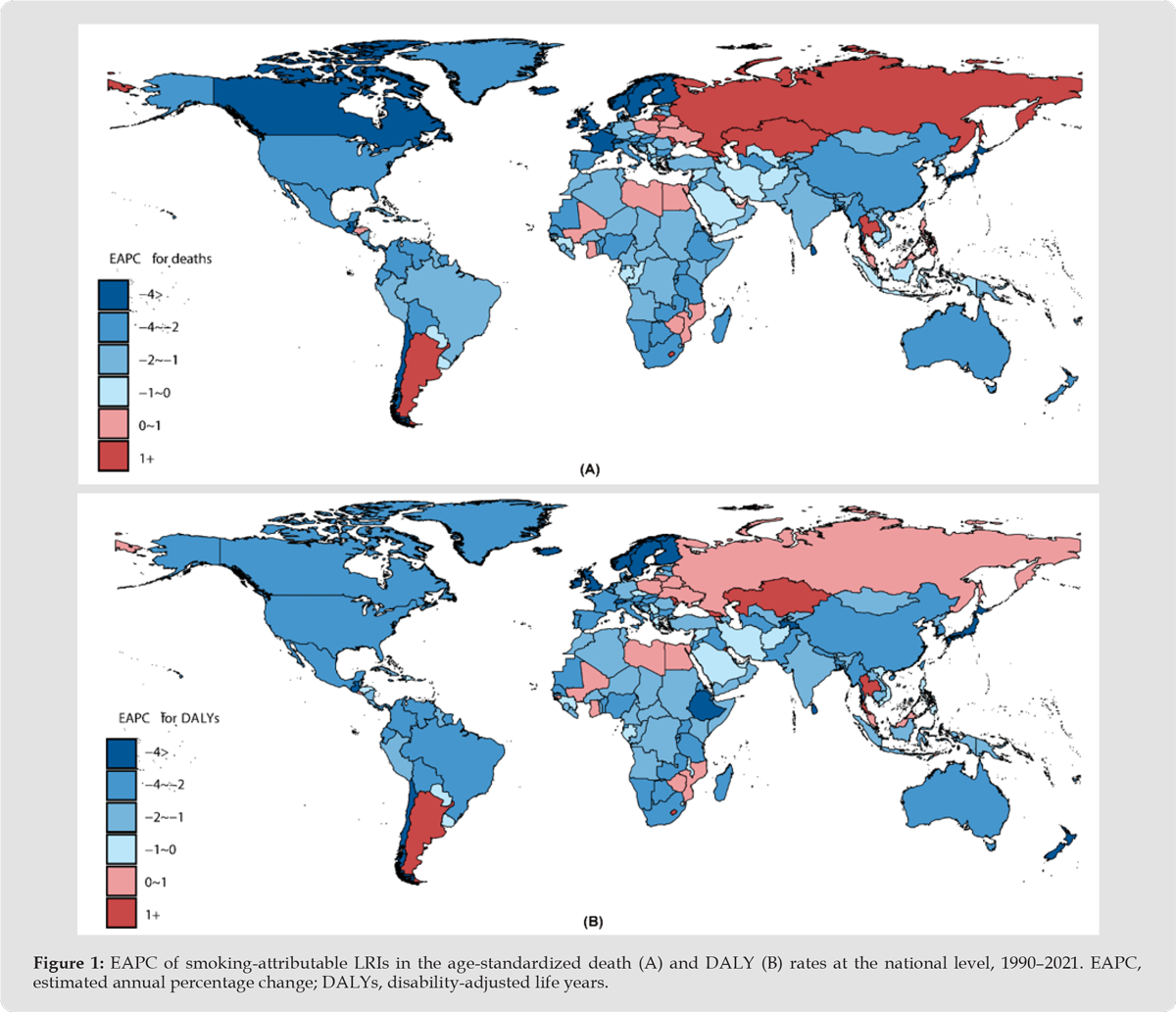
In 2021, the highest number of deaths occurred in China (36,644, 95% UI: 26,889 to 47,789), India (34,342, 95% UI: 24,983 to 44,324), and Brazil (8,108, 95% UI: 5,951 to 10,559), and the highest number of DALYs was observed in India (769,283, 95%UI: 564,173 to 986,258), China (659,409, 95%UI: 491,315 to 861,139), and the Russian Federation (204,249, 95%UI: 162,465 to 247,559). The age-standardized death rate was highest in Zimbabwe (16.59, 95% UI: 11.29 to 23.02) and lowest in Finland (0.34, 95% UI: 0.25 to 0.43), while the age-standardized DALY rate was highest in Lesotho (466.69, 95%UI: 317.99 to 648.51) and lowest in San Marino (6.61, 95% UI: 3.59 to 10.62) in 2021 (Supplementary Tables 1 and 2). Over the 32-year period, twenty- three countries showed an increasing trend in the age-standardized death rate while eight countries exhibited an increasing trend in age-standardized DALY rate. Finland (deaths: EAPC=-7.986, 95% CI: -8.79 to -7.175; DALYs: EAPC=-7.088, 95%CI: -7.707 to -6.464) and Ireland (deaths: EAPC=-7.01, 95% CI: -7.611 to -6.404; DALYs: EAPC=- 6.821, 95%CI: -7.407 to -6.231) demonstrated the largest decrease in age-standardized death and DALY rates from 1990 to 2021 (Figure 1).
Supplementary Table 1: National deaths numbers and age-standardized rates of smoking-attributable LRIs in 1990 and 2021, and temporal trends from 1990 to 2021.

Abbreviations: EAPC: estimated annual percentage change.
Supplementary Table 2: National DALYs numbers and age-standardized rates of smoking-attributable LRIs in 1990 and 2021, and temporal trends from 1990 to 2021.

Abbreviations: DALYs: disability-adjusted life years; EAPC: estimated annual percentage change
Figure 1
Deaths and DALYs of LRIs Attributable to Smoking Based on Sociodemographic Index (SDI)
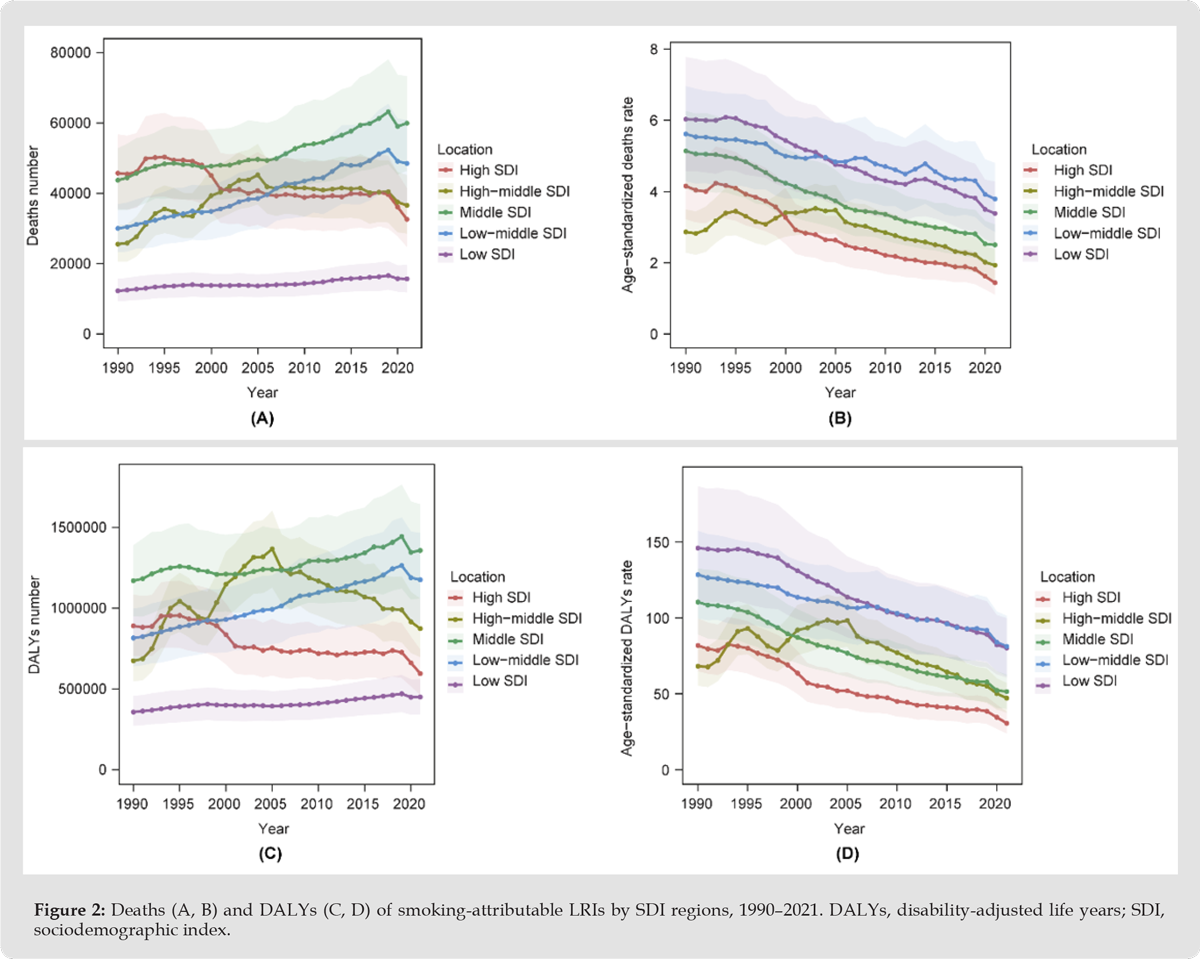
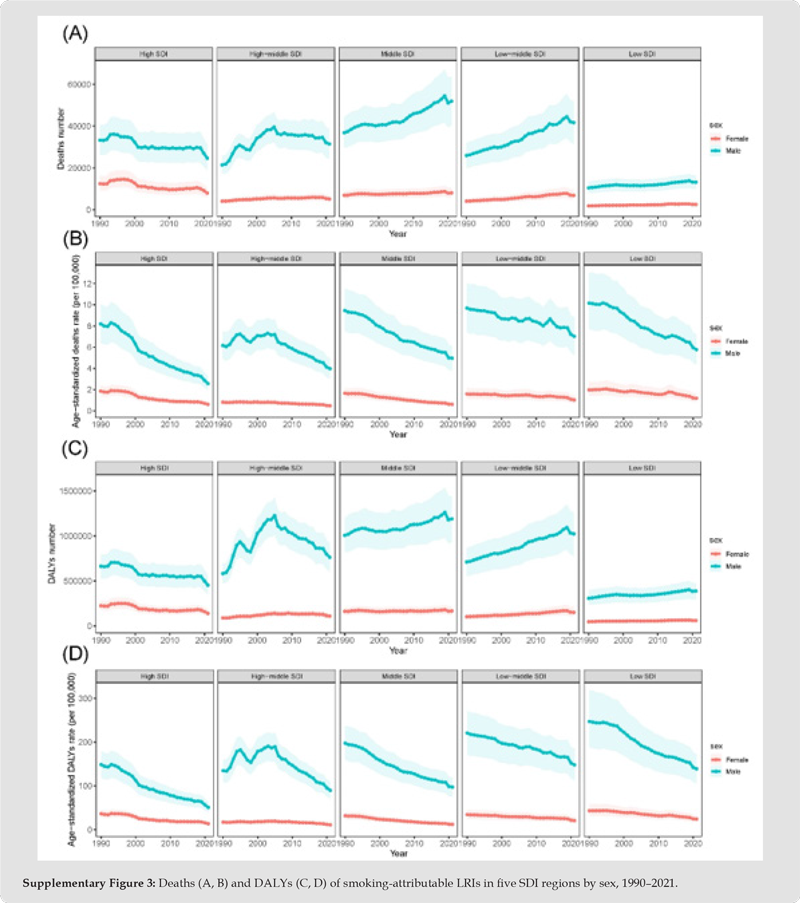
In high SDI regions, the number of deaths decreased to 32,595 (95% UI: 24,779 to 41,364) in 2021, while two plateaus were observed during the periods 1993-1999 and 2001-2018. In the high-middle SDI regions, the number of deaths fluctuated, showing a 43.28% increase compared to 1990. The middle and low-middle SDI regions experienced a significant increase from 1990 to 2021, reaching 59,954 (95% UI: 46,453 to 73,317) and 48,498 (95% UI: 36,706 to 60,904) in 2021, respectively. The low SDI regions consistently exhibited the lowest number of deaths, with a 27.82% increase in 2021 compared with 1990 (Figure 2A). The number of DALYs displayed similar changing patterns as the number of deaths across the five SDI regions, with middle SDI regions having the highest DALYs in 2021 at 1,356,699 (95% UI: 1,060,884 to 1,642,451) (Figure 2C). Age-standardized death and DALY rates decreased across the five SDI regions from 1990 to 2021, with high SDI regions showing the most significant decrease (death: EAPC=-3.306, 95% CI: -3.508 to -3.103; DALYs: EAPC=-3.023, 95% CI: -3.229 to -2.817) (Figures 2B & 2D). Males showed a higher smoking-attributable LRI burden across all SDI regions (Supplementary Figure 3).
Figure 2
Supplementary Figure 3
Deaths and DALYs of LRIs Attributable to Smoking Based on Age
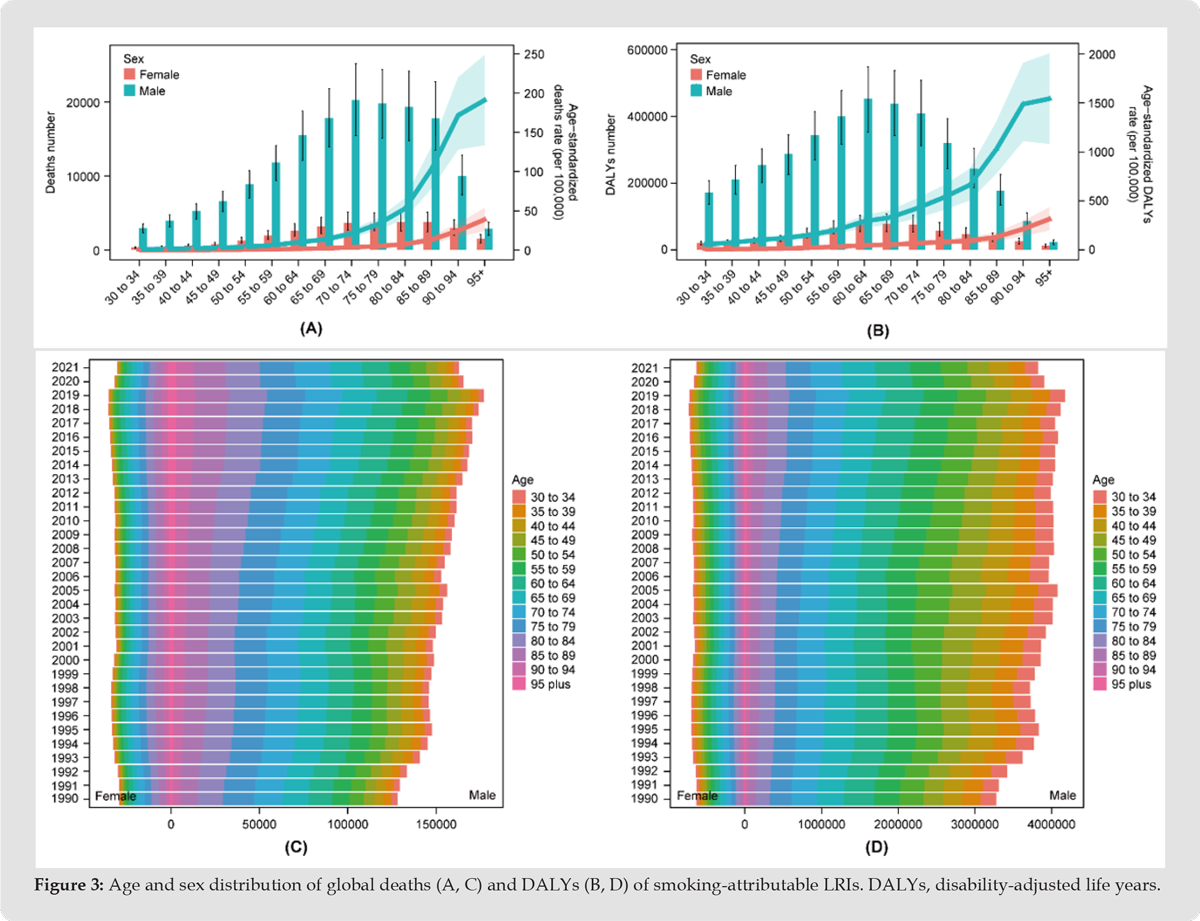
In 2021, the number of deaths increased with age, reaching a peak in the 70-74 age group before declining in both sexes. The age-standardized death rate increased gradually until the 70-74 age group, then sharply increased with advancing age (Figure 3A). DALYs displayed a trend similar to that of deaths, peaking around the 60-64 age group (Figure 3B). The number of deaths and DALYs remained higher in the five-year age groups centered around 70 years from 1990 to 2021, with males consistently recording higher numbers (Figures 3C & 3D).
Figure 3
Decomposition Analysis
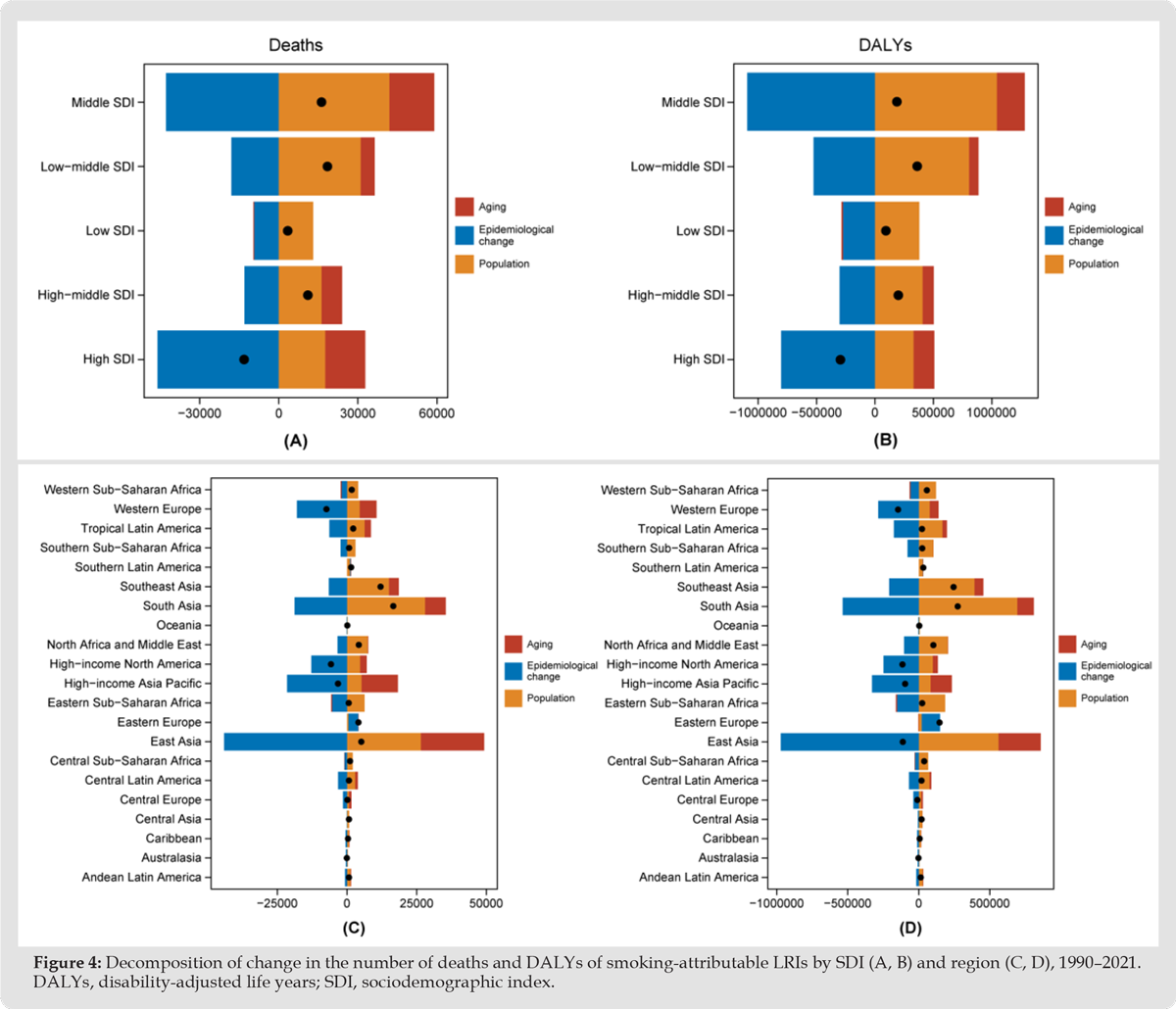
Between 1990 and 2021, population growth contributed to 119,585 deaths (331.82%) and 2,854,603 DALYs (523.47%), whereas aging contributed to 39,290 deaths (109.02%) and 519,307 DALYs (95.23%). Epidemiological changes led to a decrease of -122,836 deaths (-340.84%) and -2,828,590 DALYs (-518.7%). Population growth had a significant impact in the middle SDI regions, followed by the low-middle SDI regions. The influence of population aging was notable in the middle- and high- SDI regions (Figures 4A & 4B). Regional analysis indicated that population aging had the most pronounced effect in East Asia, High-income Asia Pacific, and South Asia, whereas population growth was the most significant in South Asia, East Asia, and Southeast Asia. Population growth has been identified as the primary driver in many regions, particularly in Eastern Sub-Saharan Africa, and population aging also plays a significant role in Central Europe, Central Latin America, and Tropical Latin America. Although epidemiological changes notably reduced the burden of smoking-attributable LRIs in most regions, they significantly increased the burden in Eastern Europe and Southern Latin America (Figures 4C & 4D).
Figure 4
Projections of Future Burden
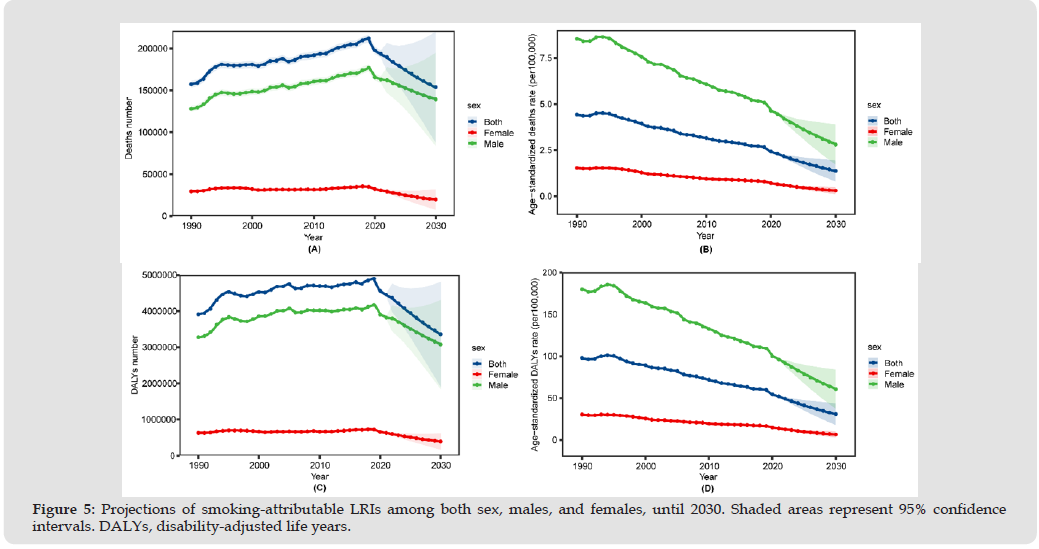
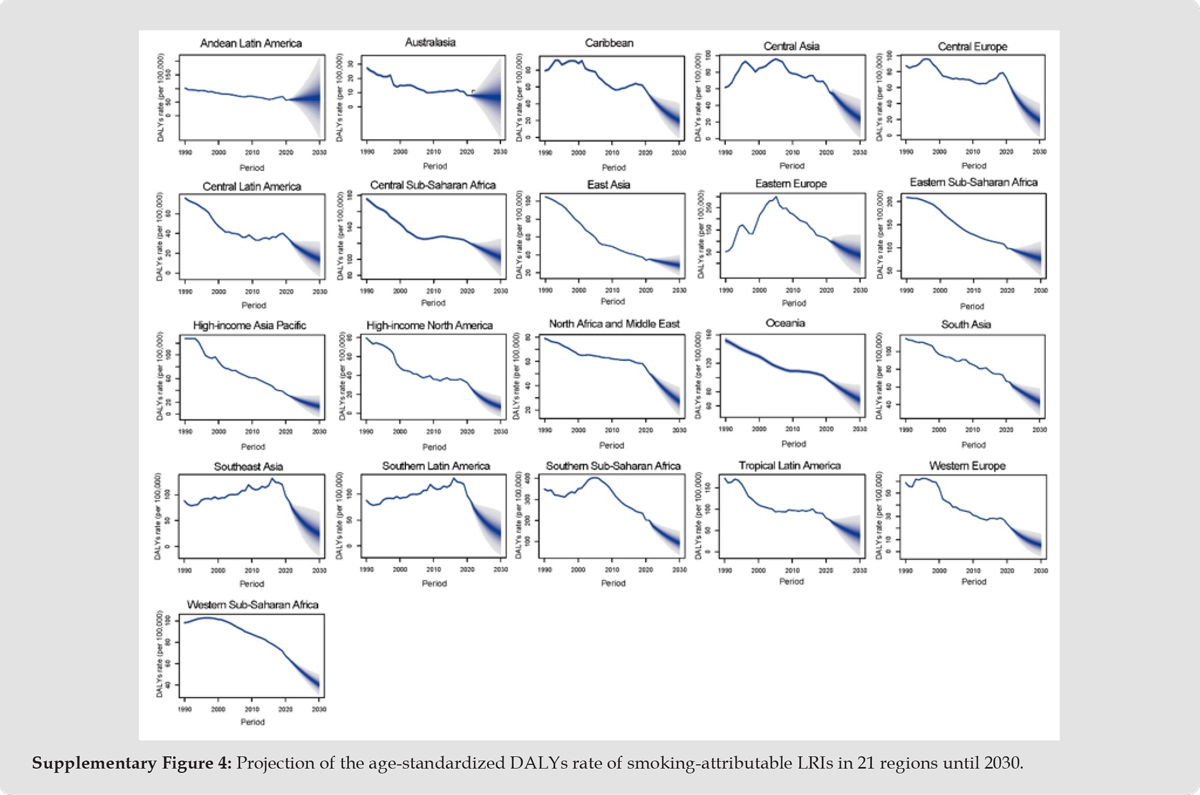
The projected number of deaths related to smoking-attributable LRIs is expected to decrease to 139,298 (95%CI: 87,473 to 220,262) in males and 19,625 (95%CI: 7,322 31,927) in females by 2030, while the projected number of DALYs is expected to decrease to 3,076,505 (95%CI: 1,845,159 to 4,307,851) in males and 395,393 (95%CI: 169,374 to 621,412) in females (Figures 5A & 5C). ASRs for smoking- attributable LRIs deaths and DALYs are projected to decrease, with expected rates of 1.37 (95% CI: 0.8 to 1.95) per 100,000 for deaths and 30.8 (95% CI: 17.92 to 43.68) per 100,000 for DALYs in 2030 (Figures 5B & 5D). Age-standardized DALYs rates were projected regionally, showing a decreasing trend in most areas, with relatively stable trend in Andean Latin America and Australasia (Supplementary Figure 4). The confidence intervals for the projections have negative values, which are likely due to insufficient data availability and should be adjusted to zero.
Figure 5
Supplementary Figure 4
LRIs continue to be a major cause of morbidity and mortality worldwide, and smoking is a significant risk factor. This study analyzed data from GBD 2021 to systematically examine the global, regional, and national burden of smoking-attributable LRIs from 1990 to 2021. Disparities in disease burden were evident across regions, age groups, and genders, with a higher concentration among elderly males in the lower to middle SDI regions. Although there is a projected decrease in the burden of smoking-attributable LRIs, it is imperative to maintain efforts to control smoking to alleviate its impact.
In the last 32 years, there has been a worldwide decrease in age-standardized death and DALY rates of smoking-attributable LRIs. This reduction aligns with the overall decrease in LRIs and smoking prevalence. [1,4] Several global initiatives have been established to address LRIs, such as the Global Action Plan for Pneumonia and Diarrhea (GAPPD), which advocates for interventions targeting the primary risks associated with contracting and succumbing to LRIs. [1] Progress in preventive, diagnostic, and therapeutic tools has contributed to reducing the burden of LRIs, for instance, mRNA-based vaccines, multiplex high-throughput systems, and advances in oxygen therapy and nutritional support. [17,18] Global efforts, such as increased tobacco taxes and implementation of health warnings on tobacco products, have played a significant role in mitigating the smoking burden, particularly following the establishment of the World Health Organization Framework Convention on Tobacco Control in 2005. [19] Despite the gradual decline in smoking-attributable LRI rates, there has been an increase in absolute numbers. This increase aligns with the increase in LRIs among all adult age groups and smokers, driven by population growth and aging, underscoring the pressing need for effective interventions [2,4].
The rates of smoking-attributable LRIs were highest in the low SDI regions. Research has shown that individuals in low-income countries, especially children under 5, bear a disproportionately high burden of LRIs.20 Lower development status is correlated with limited access to medical services and healthcare systems. Factors such as poor nutrition, low vaccination coverage, and high prevalence of HIV infection increase the risk of LRIs in these regions. [20,21] Paradoxically, regions with low SDI exhibit the lowest rates of smoking-related deaths and DALYs, possibly because of the relatively high cost of tobacco products.4 However, smoking prevalence may be underestimated due to reliance on self-reported data, particularly among demographic groups where smoking is stigmatized. [4] In 2021, smoking-attributable LRIs rates were most pronounced in Southern Sub-Saharan Africa. Sustainable socioeconomic development and comprehensive, cross-sectoral interventions, supported by international cooperation, are essential for addressing LRIs in low- SDI regions. [1,2] Furthermore, stringent smoking control measures are imperative in these regions, where over 2.8 billion people are not covered by smoke-free laws [22].
In 2021, the highest absolute numbers of smoking-attributable LRIs were observed in the middle and low-middle SDI regions, demonstrating a notable increase over the past 32 years. Countries with moderate development levels have high smoking rates, potentially due to the increased accessibility of tobacco products and inadequate health awareness. [4] Despite a gradual decline in smoking prevalence since 1990, these countries have seen consistent growth in smokers, leading to a rise in smoking-related diseases.[4] In 2021, South Asia, East Asia, and Southeast Asia have reported the highest absolute numbers of smoking-attributable LRIs, with population growth and aging playing significant roles. South Asia also had the highest number of LRI-related deaths. [1] Common pathogens in LRIs include Streptococcus pneumoniae and Haemophilus influenzae type b, with low vaccine coverage in South Asia. [23] Many residents in South Asia lack access to clean cooking fuels, leading to severe household air pollution, particularly in rural areas, necessitating interventions for a complete transition to clean fuels. [24] Moreover, cottage industries in South Asia produce tobacco products sold at low prices with minimal health warnings, evading tobacco regulations and taxes imposed on factory-made cigarettes. [25] At the national level, China, with the world’s largest producer and consumer of tobacco, recorded the highest number of deaths from smoking-attributable LRIs in 2021. [5] Antibiotic resistance is a critical concern in China, complicating treatment strategies for LRIs and leading to unfavorable clinical outcomes. [26] Furthermore, despite an overall decline in tobacco use, smoking prevalence is increasing among rural men born after 1990 in China [27].
The burden of smoking-attributable LRIs decreased most significantly in regions with high SDI. Smoking declines have been largest in high-income regions over the decades, falling by more than 40% in some high-income countries. [28] Due to strict tobacco tax policies, the affordability of cigarettes decreased significantly in 72% of high-income countries between 2008 and 2018—more than 33% of low-income countries and 38% of middle-income countries.4 A simultaneous increase in the consumption of snus, a smokeless tobacco product, in some high SDI regions, may suggest the potential benefits of transitioning to smokeless alternatives. [29] High SDI regions typically have more advanced healthcare services to manage LRIs, including high coverage of vaccines, advanced diagnostic technologies, greater accessibility to high-level antibiotics, and improved supportive care [20].
Moreover, strict antimicrobial stewardship in high SDI regions may reduce the spread of antimicrobial resistance. [30] Over the past 32 years, Finland and Ireland had the highest declines in smoking-attributable LRI burden. They were the first countries in the world to introduce anti-smoking legislation and have very active tobacco control policies, leading to a steady decrease in smoking-related diseases. [31,32] Notably, despite its relatively high development status, Eastern Europe has experienced a growing smoking-attributable LRIs burden over the last three decades. This region has a high prevalence of smoking, with tobacco contributing to more than 20% of male deaths. [33] Furthermore, seasonal influenza vaccination coverage in this area is particularly inadequate [34].
Older individuals bear a significantly high burden of smoking-attributable LRIs, with rates increasing with advancing age, and numbers peaking at approximately 70 years. Smoking has a dose-dependent impact on LRIs, placing long-term smokers at elevated risk.5 Advanced age is often associated with a compromised immune system, rendering older adults more susceptible to pathogens. Additionally, older adults commonly present with multiple comorbidities during LRIs, necessitating intensive care unit admission and potentially resulting in death. [35] Although progress has been made in reducing LRIs burden in children under five, efforts for adults have been limited, with smoking remaining a significant risk factor. [1,2] Persistent smoking cessation is the most effective preventive measure against smoking-related diseases in the elderly. [36] Studies have also indicated the benefits of pneumococcal conjugate vaccines for unvaccinated older individuals. [37] Additionally, enhancing oxygen delivery systems could further decrease LRI mortality in the elderly [18].
Males demonstrated a higher burden of smoking-attributable LRIs across all age groups than females. Smoking is the primary risk factor for males, contributing to 20.2% of male deaths and 5.8% of female deaths.4 Socially, smoking is often associated with masculinity, while female smokers may encounter increased societal stigma. Females typically smoke for shorter durations and at lower intensities than males. Moreover, alcohol consumption, which is commonly accompanied by smoking, is more prevalent in males, increasing the risk of microbe aspiration and compromising the host immune system, contributing to higher LRI mortality. [38] Even after adjusting for the combined effects of risk factors, LRIs mortality remains high in males, suggesting a potential role of genetics and hormones in the differential regulation of the immune system. [39] Additionally, smoking prevalence has decreased by 27.2% among men since 1990, and by 37.9% among women, leading to a more marked decline in smoking- attributable LRIs burden in females [4].
Despite the burden of smoking-attributable LRIs expected to decrease by 2030, sustained efforts to combat tobacco use are essential for long-term management of LRIs. Reliable messaging and methods to monitor the risks of LRI-related deaths among current, former, and non-smokers are crucial. [5] Governments and health programs should issue definitive statements on the impact of smoking on infectious respiratory diseases to advocate smoking cessation. While the prevalence of smoking is projected to decline with current tobacco policies, achieving a smoking prevalence below 5% in the future will necessitate the implementation of new tobacco control measures. [40] Furthermore, effective management of risk factors such as household air pollution, ambient particulate matter, and alcohol consumption is vital for controlling LRIs. [2] This study has several limitations. First, it dependents on the accuracy of the GBD estimates, which may be constrained in regions with limited healthcare access and incomplete disease surveillance, leading to wide intervals of uncertainty due to data scarcity. Second, the assessment of tobacco exposure may have been underestimated because of the reliance on self-reported data on smoking tobacco use, focusing mainly on traditional tobacco products. Finally, the enforcement of tobacco control measures varies significantly across countries and time periods, posing challenges in establishing associations between study findings and changes in smoking interventions.
This study underscores the ongoing global burden of LRIs attributable to smoking, especially in the low- to middle- SDI regions and among elderly males. It is imperative to implement effective tobacco control interventions to enhance the management of LRIs, with emphasis on integrating smoking cessation strategies into clinical settings.
The authors declare that this research was conducted in the absence of any commercial or financial relationships that could be construed as potential conflict of interest.
We thank the Institute for Health Metrics and Evaluation (IHME) for providing open access, the support of American Journal Experts (AJE), Xiao Ming and Li Siqi for their work on the GBD study, and the Second Affiliated Hospital of Chongqing Medical University. The text in this study was polished and significantly improved using Stork’s Writing Assistant (https://www.storkapp.me/writeassistant/).
The dataset presented in this study can be found in online repositories, and all data are available on the IHME website (https://vizhub. healthdata.org/gbd-results/).

International Association of Landscape Archaeology, Czech Glass Society, Czech Republic

Department of Chemistry, Semenov Institute of Chemical Physics, USSR Academy of Sciences, Moscow, Russia

Pharmaco-kinetics, dynamics and Drug Metabolism, Touro College of Pharmacy, USA

Professor of Nuclear Medicine, Faculty of Medicine and Surgery, University of Milan, Milan, Italy

Clinical Radiologist (MD) - Department of RADIOLOGY, Cosenza Hospital, Cosenza, Italy





 Abstract
 PDF
PDF