[email protected]
+1 (502) 904-2126
One Westbrook Corporate Center, Suite 300, Westchester, IL 60154, USA
Site Map
 ISSN: 2574 -1241
ISSN: 2574 -1241
ISSN: 2574 -1241
Received: May 13, 2025; Published: May 20, 2025
*Corresponding author: Aftimichuk Olga, Department of Combat Sports and Gymnastics, Institute of Physical Education and Sports, Moldova
DOI: 10.26717/BJSTR.2025.62.009674
The article substantiates the strengthening of mental and physical health of school teachers in the system of physical exercise classes, representing an appropriate selection of various fitness programs. The selected fitness practices allowed us to develop a fitness training system that contributed to the improvement of the psychophysical state of teachers, which, in turn, affected their social and everyday behavior.
Keywords: Gymnasium Cycle Teachers; Psychophysical Training; Fitness Programs
The natural desire for physical perfection encourages people to look for new means and methods to achieve this kind of goals. This is manifested in the increased interest of a wide range of people in fitness classes that help restore lost strength at home and at work, ensure good physical shape and good health. The teaching profession belongs to the category of intellectual work. The influence of mental labour on the body is composed of the following types: acute influence – direct impact at the end of the working day, and chronic influence – accumulating over the years [1]. An acute effect is expressed in decreased motor activity, a decrease in impulses from the muscles of the central nervous system, which reduces its tone and leads to the development of inhibitory processes in the cerebral cortex; decreased muscle tone of the whole body; weakening of the function of internal organs, which makes metabolic processes slow. The long-term influence of professional mental work not systematically eliminated on the body can cause various physiological changes in it, leading to various serious diseases, health disorders, such as hypotension in young people and hypertension in adults, the development of rapid fatigue; a tendency to colds and infectious diseases; a decrease in muscle tone, which worsens posture, etc.
Successful mental work requires not only a trained brain, but also a trained body, muscles that help the nervous system cope with intellectual stress. The stability and activity of memory, attention, perception, information processing is directly proportional to the level of fitness [2]. Various mental functions largely depend on certain physical qualities – strength, speed endurance, etc. Therefore, properly organized physical activity and optimal physical activity before, during and after the end of mental work can directly affect the preservation and increase of mental performance. The characteristics of the teacher’s work, which affect the state of health and work capacity, include the lack of a motor component in the work, a static load on the legs, an unstable daily routine, an increased load on the vocal apparatus, vision and hearing. The work of a teacher requires a clear interaction of the systems of analysis, memory, thinking, attention and imagination. And all this sometimes in conditions of lack of time [3]. Pedagogical activity is the cause of various pathological conditions of the neuropsychiatric sphere, diseases of the respiratory system, hearing and vision. Most teachers at the end of the working day note fatigue, decreased attention, weakness, dizziness, headaches and heart pain. Many people have sleep disorders. About half of teachers have some kind of neuropsychiatric disorder [4]. The special concern of the teacher should be to strengthen health, strengthen generally, form the ability not only to work, but also to rest. In this regard, the essence of the physical culture of the teacher’s personality is expressed in his own activity in physical exercises. This problem served as an impetus for the development of an experimental methodology aimed at the psychophysical training of teachers, ensuring the maintenance of a high level of mental and physical performance throughout the entire period of the school year.
The purpose of the current research is to improve the level of psychophysical condition of teachers through selected fitness programs. 10 secondary school teachers participated in the pedagogical experiment. In the framework of this study, it is necessary to determine the dynamics of the development of physical capabilities of the examined women, for which the parameters of strength, flexibility and general endurance were taken; of physiological possibilities for which a physiological parameter of the respiratory system capabilities was taken Shtange’s test; of mental capabilities – auditory memory, visual memory, working memory. In order to measure the severity of the neuropsychic stress state, the Neuropsychic Stress Questionnaire (NSQ) was conducted. The instruction is to fill out the right part of the form, marking with a plus sign those lines, the content of which corresponds to the characteristics of your current state. Processing of results – for the + sign, placed in front of point A, 1 point is awarded, for point B – 2 points and for point C – 3 points. The minimum number of points is 30, and the maximum is 90. The range of weak (detensive) neuropsychic tension varies from 30 to 50 points, moderate (intense) – from 51 to 70 points and excessive (extensive) – from 71 up to 90 points.
The experimental methodology of fitness training for female teachers provided lessons 3 times a week for 60 minutes. The structure of the training included a preparatory, basic, and final part. The preparatory part lasted 10 minutes and began with a warmup in the form of aerobic complexes, which help to stretch and warm up the muscles of the back and limbs of the body, and also cause an acceleration of the heart rate, an increase in body temperature, preparation of the musculoskeletal system for subsequent exertion and increased blood flow to the muscles. Low-impact, low-intensity exercises were included (basic aerobic steps, half-squats). At the end of the warm-up, the stretching of the muscles of the legs and lower back was performed with a small amplitude of movement.
The basic part lasted 40 minutes and included elements of Body fitness, Callanetics, which involve blocks (series) of exercises that affect one or another part of the body. At the same time, four areas determine the emphasis on the impact of physical exercises:
– Thigh: flexor and extensor muscles, adductors and abductors;
– Pelvic region: gluteal muscles;
– Trunk: muscles of the abdomen, back, shoulder girdle;
– Calf: muscles of the calf, tibia, plantar.
The nature of the exercises is determined by a calm tempo, medium intensity, high amplitude and significant repetition. The exercises are performed in various positions (standing, sitting, lying, kneeling, etc.), with the starting positions changing after a series of movements. Other means were also used – dumbbells, medicine balls, rubber shock absorbers, Gliding.
The final part (10 minutes) included Deep Stretching, static stretching, Bodyflex breathing exercises, breathing restoration exercises and general well-being. For the final part, music was used in a slow tempo, which helps to calm and relax the whole body. An important component was that the women, in addition to physical exercises, followed also an individual diet.
The effectiveness of the experimental methodology can be visualized according to the studied parameters presented in Table 1. The positive effect of the targeted methodology was manifested as follows: positive results in physical measurements showed the parameters of flexibility of the right shoulder joint (t = 4.485) and flexibility of the backbone (t = 5.965) at the level of statistical significance ρ < 0.01; and flexibility of the left shoulder joint (t = 3.539), resistance force of the leg muscles (t = 3.347), back (t = 3.838), abdominals (t = 4.206), as well as general resistance (t = 3.799) – at the level of statistical significance ρ < 0.01. The parameter of the Shtange test (t = 3.221) presented a positive result at the level ρ < 0.05. At the same time, the development of physical endurance skills of arm muscle strength (t = 0.575) turned out to be unreliable, since, in our opinion, less emphasis was placed on the hands, as a result of which the lower part of the body led to a more positive result. To identify the psychic description, a battery of relevant tests was conducted, the results of which are presented in Table 2. Parameters such as visual memory (t = 4.006), auditive (t = 4.292), psychodiagnostics of neuropsychic stress assessment (t = 3.508) showed the result at the level of ρ < 0.01, and operational memory (t = 2.839) at the level of ρ < 0.05 showed a positive trend. This indicates the correct and good interaction of modelling and physical exercises on the central nervous system, on the regulation of emotional and mental states, that their interaction improves both performance and general well-being of women. In general, it can be stated that the desired result was achieved with the help of the targeted methodology developed for modelling women. A test was also conducted to study the assessment of mental activity, in which it was revealed that temperament is associated with such personality traits as impressionability, emotionality, impulsivity, anxiety. It is impossible to change temperament during life, and this was not the goal, but in each person, there is a little of each of the types of temperament. Also, there are no good or bad temperaments – each of them has its advantages and disadvantages. These positive and negative aspects of temperament give rise to positive or negative character traits. And as it turned out, the character began to acquire positive aspects – women became more active, more artistic, more attentive, more self-controlled, friendly in the team, optimistic, friendly, punctual, calmer, smiling, more diligent at work and in everyday affairs. This was seen in their families, husbands and children.
Table 1: Dynamics of average group indices of physical abilities in women.
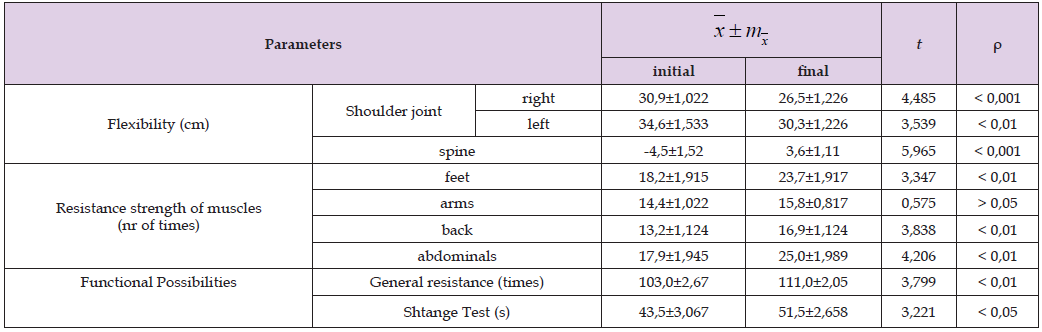
Note: n = 10 (f = 9) at р < 0.05, t = 2.228; р < 0.01, t = 3.169; р < 0.001, t = 4.587
Table 2: Dynamics of average psychodiagnostics group indices for teachers.
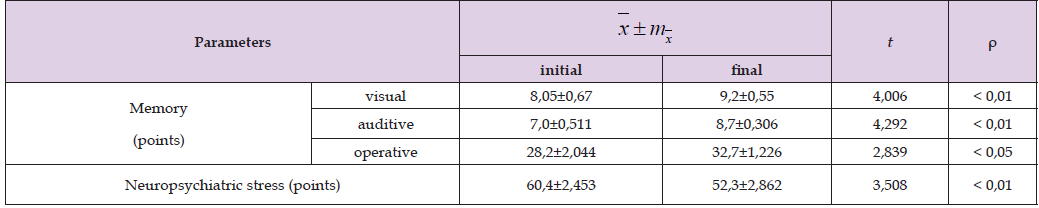
Note: n = 10 (f = 9) at р < 0.05, t = 2.228; р < 0.01, t = 3.169; р < 0.001, t = 4.587
The methodology elaborated for the development of physical abilities and mental capabilities of secondary school teachers allowed us to conclude that the application of various fitness programs in the recreational process of teachers takes place within the framework of their psychophysical training. Observations made allow us to conclude that this method demonstrates a positive effect, as it increases teachers’ motivation for recreational fitness, arouses interest in approved types of fitness, which helps to improve the process, both in the psychophysical training of female teachers, and in increasing the level of their physiological development.

International Association of Landscape Archaeology, Czech Glass Society, Czech Republic

Department of Chemistry, Semenov Institute of Chemical Physics, USSR Academy of Sciences, Moscow, Russia

Pharmaco-kinetics, dynamics and Drug Metabolism, Touro College of Pharmacy, USA

Professor of Nuclear Medicine, Faculty of Medicine and Surgery, University of Milan, Milan, Italy

Clinical Radiologist (MD) - Department of RADIOLOGY, Cosenza Hospital, Cosenza, Italy





 Abstract
 PDF
PDF